 Chuckanut Exterior
 A Roof That Has to Work Harder in Larrabee
Homes in the Larrabee area of Chuckanut sit right where Whatcom County's coastal weather does the most damage to a roof. It's not one big storm that wears a shingle roof out here — it's the daily grind of salt-laden air off the water, wind-driven rain that finds every weak lap and nail, and a moss season that runs longer than almost anywhere else in the state. An asphalt shingle roof that would hold up fine forty miles inland can start showing problems years early in Larrabee if it wasn't built for these specific conditions.
This page covers what an asphalt shingle roof actually needs to do here, what a correctly installed system looks like, and what our process looks like when we work on a Larrabee home.
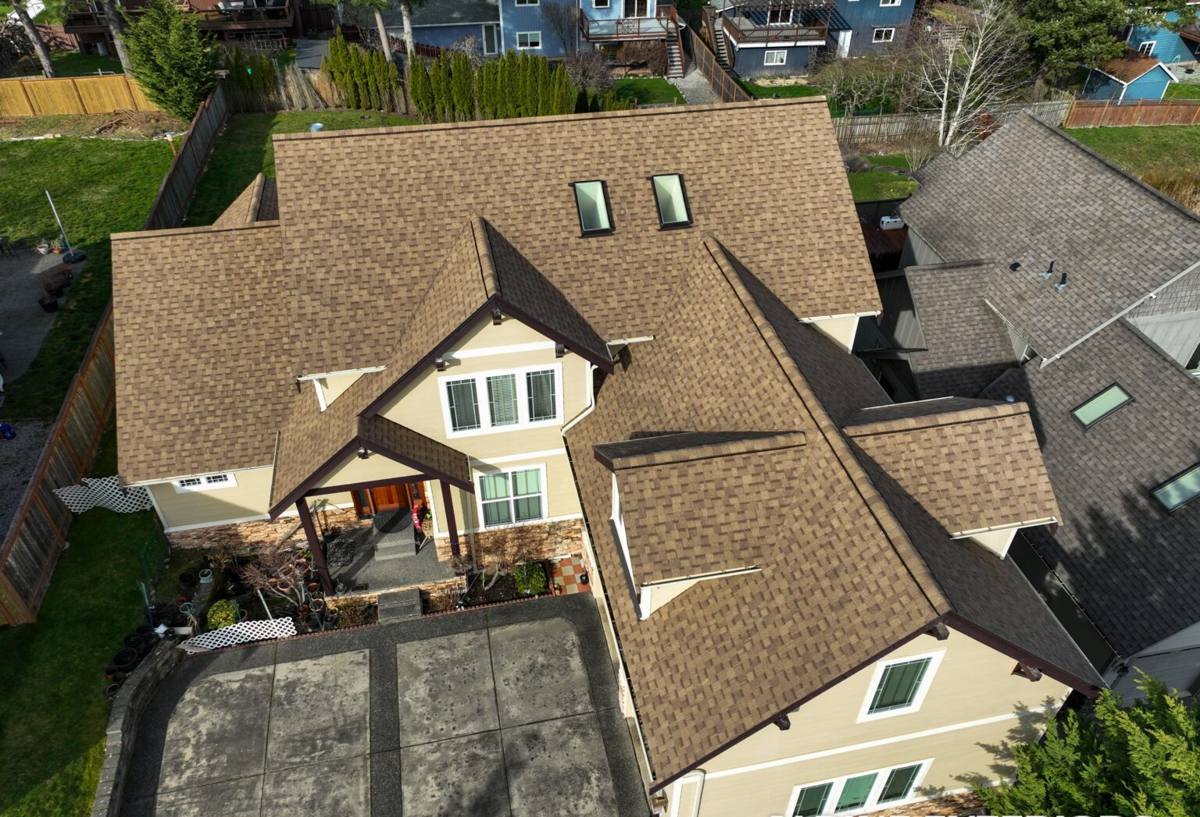
What Larrabee's Climate Actually Does to a Shingle Roof
Salt Air and Metal Fatigue
Homes closer to the shoreline take on airborne salt that settles on every exposed surface, including the metal flashing, fasteners, and vents on a roof. Over time that salt accelerates corrosion on lower-grade metal components — the parts that keep water out of valleys, chimneys, and roof-to-wall transitions. When flashing corrodes and starts to fail before the shingles themselves wear out, the leak shows up somewhere the homeowner never expects, usually well after the damage has started.
Driving Rain and Wind
Chuckanut catches weather off the water, and that means rain that doesn't just fall — it drives sideways under exposed shingle edges, loose starter courses, and anything that wasn't sealed tight the first time. A roof built for calmer, drier climates often skips details that matter a lot here, like extended ice-and-water membrane at eaves and valleys or proper starter strip adhesive along the edges.
The Long Moss Season
Between the moisture, the shade from surrounding tree cover, and the mild temperatures, moss and algae have a long window to establish themselves on a Whatcom County roof — often close to year-round. Moss doesn't just look bad; it holds moisture against the shingle surface, lifts tabs as it grows, and shortens the usable life of the roofing material underneath it.
What a Correctly Installed Asphalt Shingle Roof Includes
A shingle roof is a system, not just a layer of shingles nailed to a deck. In a climate like this, every layer of that system earns its keep:
- Deck inspection and repair — soft or delaminated sheathing gets replaced before anything new goes down, not covered up.
- Ice-and-water shield at eaves, valleys, and around penetrations, sized for the amount of wind-driven rain this area actually sees.
- Synthetic underlayment across the full roof as a secondary water barrier beneath the shingles.
- Drip edge at eaves and rakes to direct water away from the fascia and decking edge.
- Starter strip properly adhered along all edges so wind can't get under the first course.
- Correct nailing pattern per the shingle manufacturer's wind rating — this is one of the most common places corners get cut, and it's invisible once the roof is finished.
- Flashing at every chimney, wall transition, skylight, and valley, tied into the underlayment correctly rather than just caulked over.
- Balanced ventilation so the attic isn't trapping moisture underneath the new roof.
Skip any one of these and the shingles on top may look fine for a while, even as the roof underneath starts failing.
Choosing the Right Shingle for This Microclimate
Not every asphalt shingle product handles salt air, driving rain, and heavy moss pressure the same way. The table below is a general comparison of the two common categories homeowners choose between.
| Shingle Type | Typical Lifespan | Wind & Moisture Performance | Fit for Larrabee |
|---|---|---|---|
| 3-tab (standard) | 15–20 years | Lower wind rating, less mass to resist driving rain and lifting | Budget option; needs precise installation to perform here |
| Architectural / laminate | 25–35 years | Higher wind ratings, thicker profile sheds water and resists lifting better | Better long-term match for coastal exposure and moss pressure |
Within either category, look for shingles rated for algae resistance (usually copper- or zinc-infused granules built into the shingle itself). That won't stop moss entirely, but it slows the algae staining that's constant in this climate and keeps the roof looking newer longer. We'll walk you through the specific product lines available at the time of your estimate rather than locking this page to a brand that may change.
Managing Moss, Algae, and Tree Debris
Because Larrabee properties often sit under mature tree cover, moss and debris management is part of owning a roof here, not an occasional chore. A few things make the biggest difference:
- Keep gutters and valleys clear — trapped debris holds moisture against the shingle edge longer than open, draining areas.
- Address moss while it's still light growth; once it's thick and established, removal risks lifting granules and shortening shingle life.
- Trim back branches that keep a section of roof in constant shade — sun exposure, even indirect, helps a roof dry out between rain events.
- Avoid high-pressure washing on shingles; it strips granules and voids most manufacturer warranties. A proper soft wash or moss treatment protects the roof instead of damaging it.
Ventilation and Moisture Control
A roof that sheds rain well on the outside can still fail from the inside if the attic underneath it isn't ventilated correctly. In a climate with this much sustained moisture, warm indoor air that reaches an attic can condense against a cool roof deck, leading to rot, mold, and premature shingle failure from underneath — a problem that has nothing to do with the shingles themselves. We check intake ventilation (usually at the eaves) against exhaust ventilation (ridge or roof vents) to make sure air is actually moving, not just present, and correct the balance as part of any reroof.
Our Process for a Larrabee Roof
- Inspection. We walk the roof and attic, not just look from the ground, and give you an honest read on whether you need repair or full replacement.
- Written scope and estimate. You get a clear breakdown of materials, labor, and what's included — no vague allowances.
- Scheduling around the weather. Roofing in Whatcom County means working around rain windows, not against them; we plan tear-off and dry-in for realistic weather stretches.
- Tear-off and deck check. Old material comes off, and any soft or damaged decking gets replaced before anything new goes down.
- Full system installation. Ice-and-water shield, underlayment, flashing, ventilation, and shingles installed to manufacturer and code specifications.
- Cleanup and magnetic sweep. Job site and yard cleared of debris and stray nails.
- Walkthrough and documentation. We review the finished roof with you and provide your warranty paperwork.
A Realistic Maintenance Checklist
A well-installed roof still needs basic upkeep in this climate. Homeowners in Larrabee should plan on:
- Clearing gutters and valleys at least twice a year, more often under heavy tree cover
- Watching for moss growth and treating it early rather than letting it establish
- Inspecting flashing around chimneys and valleys after major wind events
- Trimming back branches that keep sections of the roof shaded and damp
- Checking attic ventilation isn't blocked by insulation or debris
- Scheduling a professional look after any storm with sustained high winds
What Drives Cost on a Larrabee Reroof
| Factor | Why It Matters Here |
|---|---|
| Roof pitch and access | Steeper roofs and limited driveway/staging access add labor time |
| Number of existing layers | Tear-off of multiple old layers takes longer and adds disposal cost |
| Deck condition | Moisture exposure over time increases the odds of hidden sheathing repair |
| Shingle class chosen | Higher wind/algae-resistant products cost more upfront but hold up longer against coastal exposure |
| Flashing and valley complexity | Chimneys, skylights, and multiple valleys each add detail work |
| Ventilation upgrades | Correcting intake/exhaust balance may require added vents or baffles |
Why a Crew That Already Works Larrabee Matters
Roofing crews that mostly work drier, inland areas don't always build in the details that matter along the Chuckanut shoreline — the extra membrane at eaves, the corrosion-resistant flashing, the ventilation correction that prevents moss and moisture problems before they start. A crew that already works this specific area has seen which parts of a roof fail first here, knows how to sequence a job around the region's rain patterns, and treats salt air and moss pressure as normal planning factors rather than surprises. That local familiarity shows up later, in a roof that's still doing its job well past the point a generic installation would have started leaking.
If you're weighing repair versus replacement, or just want an honest read on your current roof's condition, we're glad to come take a look. There's a free, no-pressure estimate form below — reach out and we'll walk the roof with you and tell you straight what it needs.