 Chuckanut Exterior
 Siding Repair in Alger: What Local Homes Are Up Against
Alger sits in a stretch of Washington where the siding on a house works hard every single day. You've got salt-laden air rolling in off the water, driving rain that comes in sideways during fall and winter storms, and a moss season that can stretch for months when the sun barely shows. None of that is dramatic on its own, but stacked together year after year, it's exactly the kind of environment that finds every weak point in a home's exterior. A nail pop that would sit harmless for a decade in a drier climate becomes a moisture entry point here in two or three wet seasons.
That's the backdrop for every siding repair call we take in this area. We're not just patching a hole or replacing a cracked board — we're evaluating whether the repair will actually hold up against the specific conditions Alger throws at it. A repair that looks fine the day we finish but doesn't account for wind-driven rain or moss buildup isn't a repair, it's a temporary fix that costs the homeowner twice.
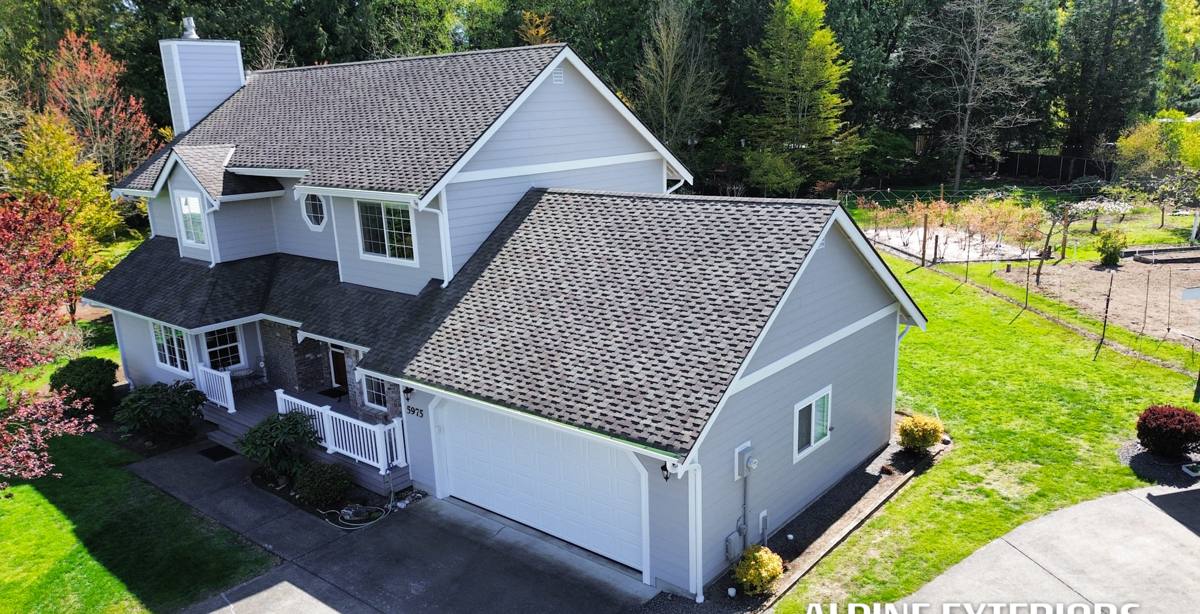
Common Siding Damage We See Around Alger
Every region has its own damage patterns, and this one is fairly consistent. Most of the repair calls we get fall into a handful of categories:
- Moisture-swollen or delaminating panels — most common on wood-based or engineered wood siding that's absorbed water at seams, edges, or fastener points over multiple wet seasons.
- Cracked or split boards — from impact, age, or repeated wet-dry-wet-dry cycling that stresses the material.
- Moss and algae staining that's compromised the surface — not just cosmetic; sustained moss growth holds moisture against siding longer than the material was designed to tolerate.
- Failed caulking and sealant at seams, corners, and trim — the first line of defense against driving rain, and the first thing to give out.
- Damage around windows, doors, and penetrations — where flashing was missed, installed incorrectly, or has simply aged out.
- Storm and wind damage — loose, lifted, or missing panels after a bad weather stretch.
The common thread in almost all of it is moisture. Salt air accelerates corrosion on fasteners and trim, driving rain finds any gap in the weather barrier, and a long moss season keeps surfaces damp far longer than they'd otherwise be. Repairing the visible damage without addressing why it happened just means we'll be back out for the same repair in a few years.
What an Honest Siding Repair Actually Involves
Diagnosing the Real Cause, Not Just the Symptom
A cracked panel or a soft spot on the wall is a symptom. Before we touch a single board, we look at what's happening behind it — is water getting trapped by failed flashing, a caulk joint that gave out, or siding that was installed too tight to the ground or a deck surface? Repairing the surface without fixing the underlying moisture path is the single most common way a "repair" ends up being redone within a few years.
Checking for Hidden Damage
Visible damage on siding is often just the tip of it. Where we find swelling, staining, or soft material, we check the sheathing and framing behind it for moisture intrusion. Catching that early, while it's still a siding-level repair, is a lot less disruptive and less expensive than catching it after it's become a structural issue.
Matching Material and Finish
Patchwork siding repair — where the replacement panel is an obviously different color, texture, or product than what's around it — is a cosmetic failure even when the workmanship is sound. We match material profile and, where possible, factory finish so the repair blends into the wall rather than announcing itself.
Rebuilding the Weather Barrier Correctly
Every repair is an opportunity to correct flashing, house wrap, and sealant details that may have been done wrong the first time. In a climate with this much wind-driven rain, the water management behind the siding matters as much as the siding itself.
Why Material Choice Matters More Here Than Most Places
Alger's combination of salt air, sustained rain, and heavy moss exposure is a tough environment for exterior materials to hold up in long-term. This is a big part of why we install James Hardie fiber cement siding exclusively and why, when a repair area needs new material rather than a patch of the original product, we recommend Hardie boards for the section.
Fiber cement doesn't absorb water the way wood-based or engineered wood siding does, and it isn't susceptible to the rot and delamination that drives a lot of the repair calls we get in this region. James Hardie's ColorPlus factory finish is also baked and cured under controlled conditions, which gives it better resistance to fading and moss staining than field-applied paint. When we're repairing a section of a home that's already on Hardie siding, matching material and color is straightforward because ColorPlus finishes are formulated for consistency across production runs. When we're repairing a home sided in a different product, we're upfront with the homeowner about what a true color and texture match will and won't look like — and when it might make more sense to consider a longer-term material change instead of chasing a match that won't hold up as well the next time around.
Repair or Replace? A Straight Answer
Not every siding problem needs a full re-side, and we're not going to tell you it does. But there's a point where repair stops being the economical choice. Here's how we think through it with homeowners:
| Factor | Leans Toward Repair | Leans Toward Replacement |
|---|---|---|
| Extent of damage | Isolated to one or two areas | Spread across multiple walls or elevations |
| Underlying moisture damage | Surface-level, sheathing intact | Sheathing or framing already affected |
| Age of existing siding | Well within expected service life | Near or past the material's realistic lifespan |
| Material match available | Close match achievable | Original product discontinued or mismatched |
| Recurrence | First repair of this type | Same issue repaired more than once already |
If a home is showing the same failure in a third or fourth spot, that's usually telling us something about the whole system — not just that one board. We'll always give a direct recommendation rather than push for the bigger job when a repair genuinely is the right call.
Our Repair Process
- On-site inspection. We look at the damage, the surrounding siding, and check behind affected areas for moisture where warranted.
- Honest assessment. We explain what caused the damage, what a proper repair involves, and whether repair or a larger scope makes more sense.
- Clear scope and pricing. No vague estimates — you know what's being repaired and why before work starts.
- Correct removal. Damaged material comes out without disturbing sound siding around it any more than necessary.
- Weather barrier correction. Flashing, house wrap, and sealant details get fixed as part of the repair, not skipped.
- Material installation and finish matching. New siding is installed to manufacturer spec, with attention to matching profile and finish.
- Final walkthrough. We review the completed work with you before calling the job done.
Why a Crew That Already Works This Area Makes a Difference
Siding repair isn't a one-size-fits-all trade. A crew that mostly works in drier inland climates isn't necessarily thinking about wind-driven rain patterns, salt exposure, or how aggressively moss can take hold on a north-facing wall in this part of Washington. We work Alger and the surrounding Whatcom County communities regularly, which means we've seen how these specific conditions actually play out on real homes over time — not just in a manufacturer's spec sheet.
That local familiarity shows up in small but important decisions: how tight to run a caulk joint given the rain exposure here, whether a given wall orientation needs extra attention to moss-prone spots, and what installation details tend to fail first in this climate versus others. It's the difference between a repair that's technically correct and one that's actually built for where it's going.
After the Repair: Keeping Moss and Moisture From Coming Back
A good repair should buy you years, not months, and a little homeowner maintenance goes a long way toward that in this climate:
- Keep gutters clear so overflow doesn't run down the siding face repeatedly during heavy rain.
- Trim back vegetation and tree cover that keeps siding shaded and damp longer than it needs to be.
- Rinse moss and algae growth off periodically rather than letting it establish and hold moisture against the surface.
- Have caulking and sealant joints checked every couple of years — they're the first thing to fail and the easiest to stay ahead of.
- Address small issues — a loose panel, a cracked caulk line — before the next wet season, not after.
If your Alger home has siding damage, showing early moisture signs, or you're just not sure whether what you're looking at is a simple fix or something bigger, we're happy to take a look. We'll give you a straight assessment and a free, no-pressure estimate — no obligation either way.