 Chuckanut Exterior
 Roof Replacement Built for Silver Beach's Waterfront Climate
Silver Beach sits close enough to the water that homes here take on a different kind of weathering than roofs a few miles inland. Salt-laden air off the bay, driving rain that comes in sideways during winter storms, and a moss season that can run most of the year all work on a roof at the same time. A roof replacement in this neighborhood isn't just about swapping old shingles for new ones — it's about choosing materials and installation details that actually hold up to these specific conditions.
We've replaced roofs throughout Chuckanut and the surrounding Whatcom County waterfront communities long enough to know which shortcuts show up as leaks two winters later. This page walks through what a Silver Beach roof replacement should involve, what to watch for, and how we approach the job.
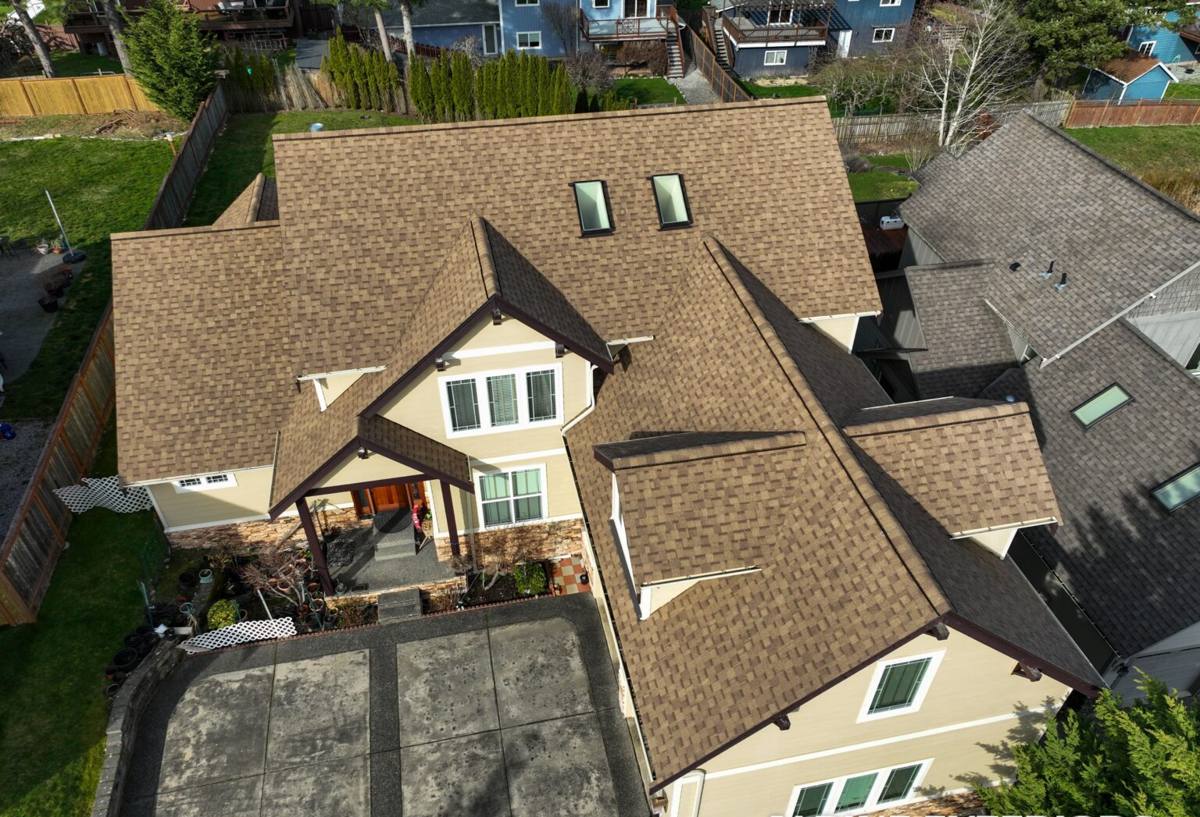
What Salt Air, Rain, and Moss Do to a Roof Over Time
Each of these three factors causes a different kind of damage, and most Silver Beach roofs are dealing with all three at once.
Salt Air
Airborne salt accelerates corrosion on exposed metal — flashing, fasteners, gutter hardware, and any exposed nail heads. Cheaper or improperly coated metal components can start rusting years before they should, and once flashing corrodes, water finds its way underneath the roofing material instead of running off it.
Driving Rain
Wind-driven rain doesn't just fall straight down — it gets pushed up under shingle edges, into exposed nail heads, and along poorly sealed valleys and roof-to-wall transitions. A roof that would perform fine in calm weather can leak here if the underlayment, flashing, and fastening pattern weren't installed with wind-driven rain in mind.
Moss
Whatcom County's damp shoulder seasons and shaded lots give moss a long window to establish itself, especially on north-facing slopes and under tree cover. Moss holds moisture against the roofing material, lifts shingle edges as it grows, and works its way under tabs and shakes. Left alone, it shortens the life of almost any roofing material.
Signs a Silver Beach Home Needs a Full Replacement, Not a Repair
Not every roof problem calls for full replacement, and we'll tell you honestly when a repair is the right call. But certain signs usually mean the roof has reached the end of its useful service life:
- Granule loss heavy enough that you're finding sand-like buildup in gutters or downspouts
- Shingles that are cupping, curling, or cracking across multiple areas of the roof, not just one spot
- Moss or moisture staining that keeps returning within a season or two of cleaning
- Soft spots or sagging when walked on, which often points to deck damage underneath
- Leaks appearing in more than one location, or a leak that keeps reappearing after patching
- Flashing around chimneys, vents, or skylights that's visibly rusted, lifted, or missing sealant
- The roof is nearing or past the expected lifespan of its material, especially if it was installed without upgraded underlayment
If a roof is showing one or two of these in isolation, targeted repair may buy several more years. If several are present together, that's usually a sign the roofing system as a whole — not just the surface layer — is failing.
Roofing Materials That Hold Up Near the Water
There's no single "best" roofing material for every home — it depends on the roof's slope, the home's style, budget, and how much maintenance the homeowner wants to take on. Here's how the common options compare for a salt-air, high-moisture environment like Silver Beach.
| Material | Moisture & Moss Behavior | Maintenance | Typical Lifespan |
|---|---|---|---|
| Architectural asphalt shingles | Good when paired with proper ventilation and algae-resistant granules; can hold moss without cleaning | Periodic moss treatment and gutter clearing | 25–30 years |
| Standing seam metal | Sheds water and resists moss well due to smooth, steep-shedding surface; needs corrosion-resistant fasteners and coatings near salt air | Low; occasional fastener and sealant checks | 40–50+ years |
| Cedar shake | Attractive but holds moisture readily; needs consistent airflow underneath and regular moss management to avoid rot | High; regular cleaning and treatment required | 20–30 years with upkeep |
| Synthetic/composite shingles | Resists moisture absorption and moss better than wood; performance varies by manufacturer | Low to moderate | 30–50 years depending on product |
We don't install cedar shake as a standard recommendation for tight, shaded, or heavily shaded Silver Beach lots — not because the material is bad, but because the maintenance burden and moisture sensitivity make it a poor fit for this specific climate unless a homeowner is committed to ongoing upkeep. We'll always explain the trade-offs of a given material honestly rather than push whatever's easiest to install.
Our Roof Replacement Process, Step by Step
A roof replacement done right isn't just about the shingles you see. Here's the sequence we follow on every job:
- Inspection and assessment. We check the roof deck, existing ventilation, flashing condition, and any signs of moisture intrusion before recommending replacement over repair.
- Tear-off. Old roofing material is fully removed so the deck can be inspected directly — this is where hidden rot or soft spots get caught, not guessed at.
- Deck repair. Any damaged or soft decking is replaced. Roofing over a compromised deck just hides the problem and shortens the life of the new roof.
- Underlayment and ice/water protection. Given the driving rain this area gets, we pay particular attention to underlayment quality and coverage at eaves, valleys, and roof penetrations.
- Flashing. New flashing is installed at chimneys, vents, skylights, and wall transitions — corrosion-resistant materials matter here given the salt air.
- Roofing material installation. Installed to manufacturer specification with attention to nailing pattern and exposure, both of which affect wind and rain resistance.
- Ventilation check. We confirm intake and exhaust ventilation are balanced, which affects both energy efficiency and how much moisture builds up under the roofing material.
- Cleanup and final walkthrough. Debris and fasteners are cleared from the property, and we walk the finished roof with the homeowner.
Ventilation and Moss Prevention Matter as Much as the Shingles
A common mistake in roof replacements is focusing entirely on the surface material and treating ventilation and moss prevention as afterthoughts. In a moss-prone, high-moisture area like Chuckanut, that's a mistake that shows up within a few years.
Proper attic and roof ventilation keeps warm, moist air from condensing against the underside of the roof deck — which both extends the life of the roofing material and reduces the moisture that helps moss take hold in the first place. We also discuss practical moss prevention options with homeowners at the time of replacement, such as zinc or copper strips near the ridge, which use rainwater runoff to inhibit moss growth over time without chemical treatment. These are small additions during a replacement that are far more disruptive to add later.
Why Local Experience in Silver Beach Matters
A roofing crew that mostly works drier inland areas won't necessarily think about wind-driven rain at valleys, or corrosion-grade fasteners near saltwater, or which slopes on a given lot will fight moss year-round. These aren't exotic problems — they're just specific to this kind of location, and they change how a roof should be built.
Working regularly in Whatcom County's waterfront neighborhoods means we're not guessing at how a roof will hold up here — we're applying what we've already seen work and what hasn't. That shows up in material choices, flashing details, and ventilation decisions that a generic roofing job might skip.
What Affects the Cost of a Silver Beach Roof Replacement
Every roof is different, so we won't quote a number without seeing the job — but these are the main factors that drive cost up or down:
| Factor | Why It Matters |
|---|---|
| Roof size and complexity | More valleys, dormers, and penetrations mean more labor and flashing detail |
| Material selection | Asphalt, metal, and composite options have different material and installation costs |
| Deck condition | Rot or soft decking discovered during tear-off adds repair cost but prevents bigger problems later |
| Ventilation upgrades | Bringing older ventilation up to current standards may add scope but pays off in roof longevity |
| Access and site conditions | Steep slopes, limited driveway access, or tree cover can affect labor and setup time |
| Tear-off layers | Removing multiple existing roofing layers takes more time than a single-layer tear-off |
We walk through these factors with every homeowner during the estimate so there are no surprises once work begins.
Ready When You Are
If your Silver Beach roof is showing its age, or you just want an honest opinion on whether repair or replacement makes sense, we're happy to take a look. Fill out the form below for a free, no-pressure estimate — we'll walk the roof, explain what we find in plain terms, and give you options rather than a single hard sell.