 Chuckanut Exterior
 New Roof Installation Built for Sehome's Coastal Climate
A new roof is one of the few home improvements where the installation matters as much as the materials. In Sehome, that's especially true. Homes here sit close enough to the water to pick up salt-laden air, get hit by driving rain off the Chuckanut hillsides, and spend a good chunk of the year under damp, shaded conditions that grow moss faster than most homeowners expect. A roof that's installed correctly for this climate will outperform a roof that's simply installed "to code" by a wide margin over its lifespan.
This page covers what a proper new roof installation looks like specifically for Sehome homes, what our process involves from first inspection to final walkthrough, and what to think about before you sign a contract with anyone — us included.
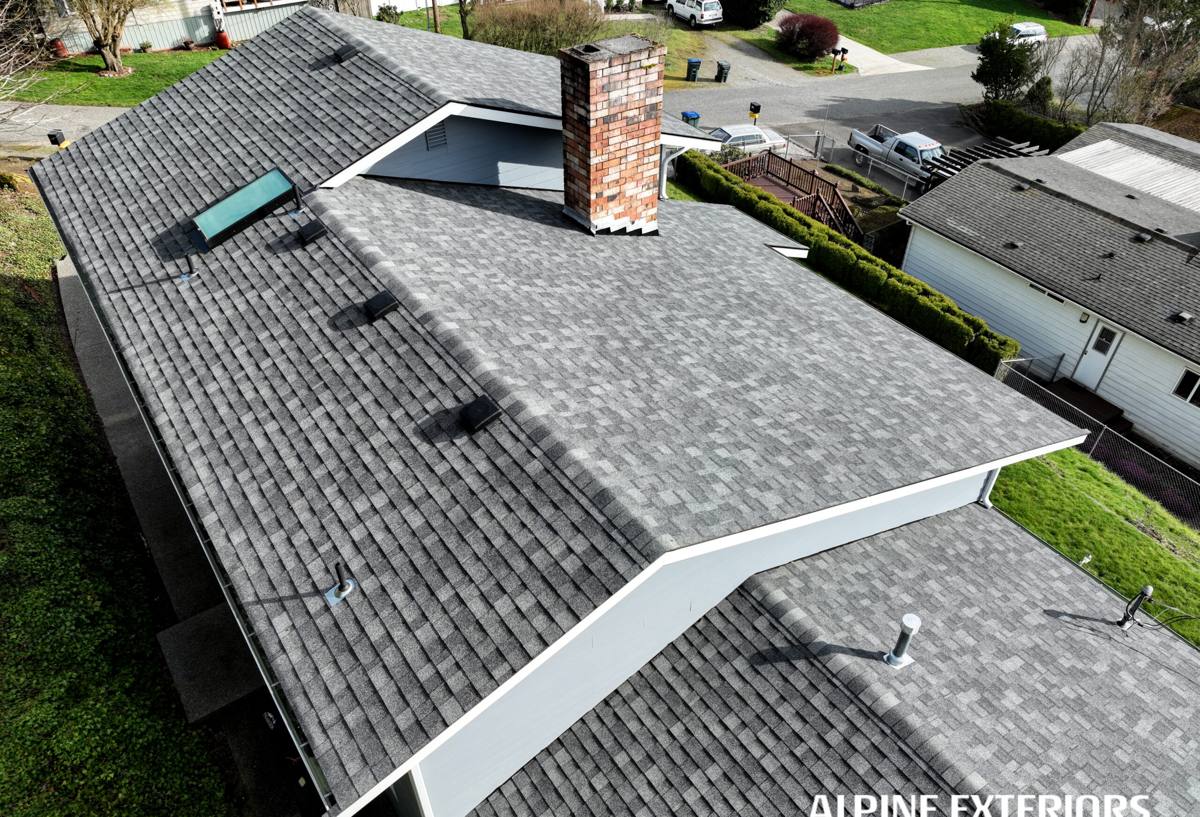
What Sehome Homes Actually Need From a Roof
Whatcom County's marine climate creates a specific set of demands on a roofing system that differ from what you'd design for a drier inland region. Three factors matter most here:
Salt Air and Corrosion
Proximity to Bellingham Bay and the Salish Sea means airborne salt settles on exposed metal — flashing, fasteners, vents, and gutters — and accelerates corrosion over time. Standard galvanized fasteners can start showing rust streaks years before they should. We spec corrosion-resistant fasteners and flashing metals as a baseline, not an upgrade, on any roof we install this close to the coast.
Driving Rain
Rain here doesn't always fall straight down. Wind off the water and the terrain around Chuckanut Mountain can push rain sideways into roof valleys, wall-roof intersections, and under poorly lapped shingles. A roof that's fine in a calm rain can still leak in a wind-driven storm if the underlayment, flashing, and shingle lap aren't installed with that in mind.
Long Moss Season
Shaded north-facing slopes, mature tree cover, and months of damp weather add up to a moss season that runs longer here than in drier parts of the state. Moss isn't just cosmetic — it holds moisture against the roofing material, lifts shingle edges, and works its way under flashing over time. Roof design (ventilation, slope, material choice, and zinc or copper strip placement) can meaningfully slow moss growth; installation quality determines whether moss becomes a nuisance or a structural problem.
Choosing the Right Roofing System for This Climate
There's no single "best" roofing material for every Sehome home — it depends on your roof's slope, sun/shade exposure, budget, and how long you plan to stay in the house. Here's an honest comparison of the systems we most often install in this area:
| Material | Typical Lifespan | Moss Resistance | Salt Air Durability | Notes |
|---|---|---|---|---|
| Architectural asphalt shingle | 25–30 years | Moderate — improves with zinc strips | Good with proper fasteners | Most common choice; wide style/color range, moderate cost |
| Standing seam metal | 40–60 years | Strong | Excellent with marine-grade coatings | Sheds moss and debris well; higher upfront cost |
| Synthetic/composite shake | 30–50 years | Good | Good | Mimics cedar shake look without the moisture upkeep |
| Cedar shake | 20–30 years (with upkeep) | Poor unless treated regularly | Moderate — fasteners need care | Requires ongoing maintenance in this climate; we're upfront about that before recommending it |
We don't push cedar shake on coastal, shaded lots as a default. It's a beautiful material, but in a damp, moss-prone climate it demands a maintenance schedule most homeowners don't want to keep up with. That's a trade-off we'll walk you through honestly rather than let you find out the hard way after installation.
What a Correct Installation Actually Involves
The material on top is only part of a roofing system. What's underneath it does most of the work of keeping water out. A correct installation includes:
- Deck inspection and repair — replacing any rotted or delaminated sheathing before new material goes down, not covering it up
- Ice and water shield at eaves, valleys, and roof-to-wall transitions, where wind-driven rain and moss buildup cause the most trouble
- Synthetic underlayment across the full deck as a secondary water barrier
- Proper flashing at every penetration — chimneys, vents, skylights, and sidewalls — using corrosion-resistant metal
- Correct nailing pattern matched to the manufacturer's wind-rating specifications, not just "enough nails"
- Balanced attic ventilation — intake at the eaves, exhaust at the ridge — sized to the attic's square footage
- Drip edge at eaves and rakes to direct water away from the fascia and into the gutters
Skipping or shortcutting any one of these doesn't usually show up as a problem in year one. It shows up in year eight or ten, as a leak that traces back to a missing step nobody can see once the shingles are down. That's why the installation process matters more than the shingle brand printed on the invoice.
Our Installation Process
1. Inspection and Estimate
We start with a full roof and attic inspection — not just a look from the ground. That includes checking the deck condition where accessible, ventilation setup, flashing points, and any signs of past moss or moisture damage. You get a written estimate that spells out material, labor, and scope, with no vague allowances.
2. Site Protection
Before tear-off begins, we protect landscaping, siding, windows, and gutters. Debris control matters on a job like this — old shingles, nails, and underlayment scraps need to come down cleanly, not end up in flower beds or gutters.
3. Tear-Off and Deck Assessment
We remove the existing roofing down to the deck. This is the point where hidden damage — rotted sheathing, old leaks, compromised framing — actually gets found and fixed, rather than papered over with a new layer on top of old problems.
4. Underlayment, Ice/Water Shield, and Flashing
This is where the climate-specific work happens: ice and water shield at vulnerable points, full synthetic underlayment, and new flashing at every penetration and transition, all in corrosion-resistant materials appropriate for salt air exposure.
5. Roofing Installation
Material goes down to manufacturer spec — nailing pattern, exposure, and lap all matched to the wind and rain conditions typical of this area, not just the minimum code requirement.
6. Ventilation Check and Adjustment
We confirm intake and exhaust ventilation is balanced for the attic space. Poor ventilation is one of the biggest contributors to premature moss growth and shingle aging in this climate, and it's often overlooked on re-roofs that just match what was there before.
7. Cleanup and Final Walkthrough
Full site cleanup including a magnetic nail sweep, followed by a walkthrough where we show you what was done and answer questions before we consider the job finished.
Ventilation and Moisture Control in a Moss-Prone Climate
Ventilation doesn't get much attention in roofing conversations, but in a climate like Whatcom County's it's one of the biggest factors in how long a roof actually lasts. An attic that traps heat and moisture accelerates shingle aging from underneath, while a roof deck that stays cool and damp on shaded slopes is exactly the environment moss needs to establish itself. Balanced ventilation — enough intake at the soffits to match exhaust at the ridge — keeps air moving across the underside of the deck, which helps the roof dry out between rain events instead of staying saturated. On heavily shaded or north-facing sections of roof, we'll also talk through zinc or copper control strips near the ridge, which release trace metal ions with rainfall that discourage moss and algae growth over time. None of this eliminates moss entirely in a climate this wet, but it meaningfully slows it down and reduces how often the roof needs manual cleaning.
Cost Factors for a New Roof in Sehome
Roofing costs vary based on several factors specific to your home and site. We won't quote a number without seeing the roof, but here's what typically moves the price:
| Factor | Effect on Cost |
|---|---|
| Roof size and number of squares | Largest single driver of total cost |
| Roof pitch and complexity | Steep or multi-plane roofs take longer and require more safety setup |
| Deck condition | Rotted sheathing found during tear-off adds material and labor |
| Material choice | Asphalt shingle is generally the most budget-friendly; metal and synthetic shake cost more upfront |
| Access and site conditions | Tree cover, tight lot lines, or difficult staging can add time |
| Tear-off layers | Removing multiple existing roofing layers adds labor and disposal cost |
We provide a written, itemized estimate so you can see exactly what's driving the cost on your specific roof — not a single lump-sum number with no explanation behind it.
After Installation: A Practical Maintenance Checklist
A new roof still needs occasional attention in this climate to reach its full expected lifespan. We recommend homeowners keep an eye on:
- Gutters and downspouts cleared of debris at least twice a year, more often under heavy tree cover
- Visible moss growth addressed early with gentle removal methods — not pressure washing, which can strip granules and shorten shingle life
- Attic checked periodically for signs of condensation or moisture, which can signal a ventilation issue
- Flashing around chimneys, vents, and skylights visually checked after major storms
- Overhanging branches trimmed back to reduce shade, debris, and abrasion on the roof surface
- Any granule buildup in gutters noted and mentioned at your next roof inspection
Why Hire a Crew That Already Works in Sehome
Roofing crews who work regularly in this part of Whatcom County build a practical understanding of things that don't show up in a general roofing manual: which slopes and tree lines tend to hold moss longest, how far wind-driven rain actually travels up a valley in a coastal storm, and which fastener and flashing choices hold up over years of salt air exposure rather than just passing inspection on day one. That local pattern recognition shows up in small decisions throughout a job — where to add extra ice and water shield, how to detail a valley, which ventilation setup actually keeps an attic dry through a wet Whatcom winter. It's the difference between a roof installed to a generic spec and one installed for the specific conditions it has to survive.
We also know the practical side of working in this area: typical permitting expectations, common roof styles and pitches in the neighborhood, and what tends to go wrong on homes with the kind of mature tree cover and shaded exposure common around Sehome.
Getting Started
If your roof is aging, showing granule loss, holding moss no matter how often you clean it, or just due for replacement, we're happy to take a look and walk you through your options honestly — including telling you if repair still makes more sense than full replacement. Reach out for a free, no-pressure estimate using the form below.