 Chuckanut Exterior
 Why Sedro-Woolley Homes Put Extra Demands on Windows
Homes in and around Sedro-Woolley deal with a specific combination of weather that's harder on windows than people expect. Salt-laden air moving in off Puget Sound and the Salish Sea corrodes hardware and pits weaker metal components over time. Driving rain, pushed sideways by wind rather than falling straight down, finds every gap in flashing and every worn seal. And the long, gray moss season here means constant moisture sitting against siding, trim, and window frames for months at a stretch. None of that is dramatic on its own, but stacked together year after year, it's exactly the kind of slow, cumulative punishment that turns a decent window into a drafty, foggy, hard-to-open problem within a decade or two.
Energy efficiency isn't just about a lower power bill, though that matters. In this climate it's really about whether a window can shed water, resist condensation, and keep its seal intact through repeated wet-dry-wet cycles. A window that's efficient on paper but installed or specified wrong for this region will still let cold air in, still fog up on damp mornings, and still invite rot at the sill within a few winters.
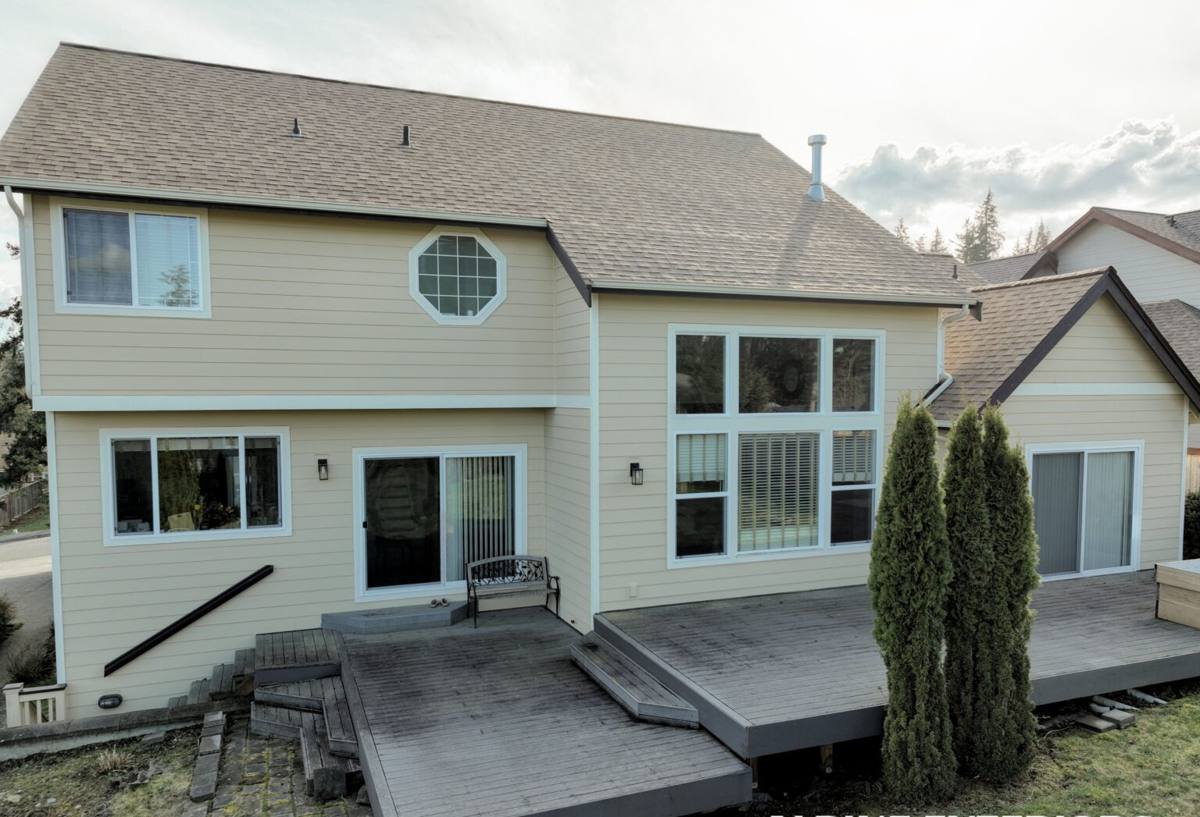
What "Energy-Efficient" Actually Means for a Whatcom County Home
The phrase gets used loosely in the window industry. For a Sedro-Woolley home, it breaks down into three things working together: the glass package, the frame material, and how the window is installed and flashed. Get any one of the three wrong and the other two can't fully compensate.
Glass Packages
- Double-pane with low-E coating and argon fill — the standard baseline for most residential replacements. Low-E coatings reflect radiant heat while still letting visible light through, and argon between the panes slows heat transfer compared to plain air.
- Triple-pane — meaningfully better insulation and sound dampening, worth considering on north- and west-facing walls that take the brunt of our weather, or in rooms where comfort has always been a complaint. It costs more and adds weight, so it's not automatically the right call for every opening.
- Warm-edge spacers — the material separating the panes at the edge of the glass unit matters more than most homeowners realize. In a climate with constant temperature and humidity swings, a warm-edge (non-metal or thermally broken) spacer resists condensation at the glass edge better than older aluminum spacers.
Frame Materials
| Frame Type | How It Handles Our Climate | Maintenance | General Price Position |
|---|---|---|---|
| Vinyl | Good moisture resistance, no rot risk, decent thermal performance | Low — occasional cleaning | Most affordable |
| Fiberglass | Excellent — dimensionally stable in wet/cold swings, strong against salt air corrosion | Low | Mid to upper range |
| Wood-clad | Attractive, but the cladding seams and any exposed wood are vulnerable if flashing or caulking fails | Higher — needs regular inspection of seals and cladding joints | Upper range |
| Aluminum | Conducts heat and cold readily; can corrode faster in salt-air exposure without a quality finish | Moderate | Varies |
We don't push one frame material as universally "best." Vinyl is a sound, budget-friendly choice for most Sedro-Woolley homes. Fiberglass earns its higher price on homes closer to open water or with a lot of west-facing glass. Wood-clad can look great, but we're honest with clients that it demands more long-term attention in a climate this wet — that's a maintenance trade-off, not a defect, and it's worth knowing before you commit.
The Part Most Homeowners Underestimate: Installation
A high-efficiency window installed poorly will underperform a mid-grade window installed correctly — every time. In our climate, installation quality usually comes down to a few specific details:
- Sill pan flashing that gives any water that gets past the window a way back out, rather than letting it pool and soak into framing.
- Proper shimming and squaring so the sash operates smoothly and the seal compresses evenly all the way around — an out-of-square window leaks air even with perfect glass.
- Compatible sealants and flashing tape matched to your siding type, applied in the right order (always working from the bottom up so water sheds outward, never inward).
- Insulating the gap between the window frame and rough opening without overpacking it, which can bow the frame and cause the sash to bind.
This is where driving rain exposes shortcuts fastest. A window that's caulked around the outside but never properly flashed at the sill can look fine for a year or two, then start showing water staining on interior trim or, worse, hidden rot inside the wall before anyone notices.
Signs Your Current Windows Are Costing You Money
Before assuming you need a full replacement, it's worth checking for these signs. Some point to a simple repair; others confirm it's time to replace.
- Visible condensation or fogging between the panes — the seal has failed and the gas fill (if any) is gone. This is not fixable; the glass unit needs replacing.
- Drafts you can feel by hand along the frame edge on a windy day.
- Soft or discolored wood trim around the window, especially at the bottom corners.
- Difficulty opening, closing, or locking — often a sign the frame has shifted or swollen.
- Visible moss or algae growth on the frame or sill that keeps coming back despite cleaning.
- A noticeable difference in room temperature near the window compared to the rest of the house.
- Rising heating costs without a clear cause elsewhere in the home.
Our Process for Sedro-Woolley Window Projects
1. On-Site Assessment
We look at each opening individually — exposure direction, current condition of the framing and sill, existing signs of water intrusion, and how the window fits into your siding and trim. Not every window on a house needs the same solution.
2. Product Selection
We walk through frame material, glass package, and grille or hardware options based on your budget and how exposed that particular wall is to wind-driven rain. We're straightforward about where you can save money without sacrificing performance, and where it's worth spending more.
3. Removal and Prep
Old windows come out carefully so we can inspect the rough opening underneath — this is often where hidden moisture damage from a prior installation turns up. Any compromised framing gets addressed before the new window goes in, not covered over.
4. Flashing and Weatherproofing
Sill pan flashing, properly lapped house wrap or building paper, and correctly sequenced tape and sealant. This is the step that determines whether the window performs well for twenty years or starts failing in five.
5. Installation and Finish
Window set, shimmed, and squared; insulated; trimmed out to match your home's existing look inside and out.
6. Cleanup and Walkthrough
We clear debris, walk through operation of every new window with you, and cover basic care specific to our climate.
Cost Factors to Expect
| Factor | Why It Moves the Price |
|---|---|
| Number of openings | More windows means more material and labor, but often a better per-unit rate |
| Frame material | Vinyl, fiberglass, and wood-clad carry different material costs |
| Glass package | Triple-pane and specialty coatings add cost over standard double-pane low-E |
| Condition of existing framing | Rot or water damage found during removal requires repair before installation |
| Window size and style | Large picture windows or custom shapes cost more than standard double-hung sizes |
| Access and site conditions | Second-story or hard-to-reach openings can add labor time |
We provide a written estimate broken down by opening so you can see exactly what's driving the cost, and where you have options.
Why It Matters to Hire a Crew That Already Works This Area
Sedro-Woolley's weather pattern isn't identical to drier parts of Washington, and it's not identical to homes right on the water either — it's its own mix of rain exposure, humidity, and seasonal moss growth. A crew that installs windows here regularly already knows which details of flashing and sealant selection matter most for this specific combination of conditions, and has seen firsthand what happens when those details get skipped. That local pattern recognition is hard to substitute for, no matter how good a product's specifications look on paper.
Living With Your New Windows: Moss-Season Maintenance
Energy-efficient windows still need basic upkeep in this climate. A few habits go a long way:
- Rinse frames and sills periodically during the wettest months to keep moss and algae from taking hold.
- Check weep holes (the small drainage openings along the bottom of the frame) to make sure they aren't clogged with debris.
- Inspect exterior caulking annually, especially after a hard winter, and touch up any cracked or separated beads.
- Keep gutters and downspouts clear so runoff isn't sheeting directly down over window heads.
None of this is complicated, but skipping it is how a well-installed window ends up with an avoidable problem five or ten years down the road.
If your Sedro-Woolley home has windows that are drafty, foggy, hard to operate, or just old enough that you're wondering whether replacement makes sense, we're happy to take a look and give you a straight answer. Reach out for a free, no-pressure estimate using the form below.