 Chuckanut Exterior
 Building New in Blanchard? The Windows Need to Match the Climate, Not Just the Plans
Blanchard sits close enough to the water and the foothills that new homes here take a steady beating from salt-laden air, driving rain off Samish Bay, and a moss season that can run half the year. When a house is still framed and open, the window install is one of the few chances to get the water management right the first time — before siding, trim, and drywall cover up whatever decisions were made at the rough opening. Get it right during new construction and the windows outlast the finishes around them. Get it wrong and you're chasing leaks, staining, and soft trim within a few winters, no matter how good the window itself is.
This page is about new-construction window installation specifically for Blanchard builds — not retrofit or replacement work, which is a different process with different flashing logic. If you're framing, pre-wiring, or already at rough opening stage, this is the install method that holds up under Whatcom County's weather.
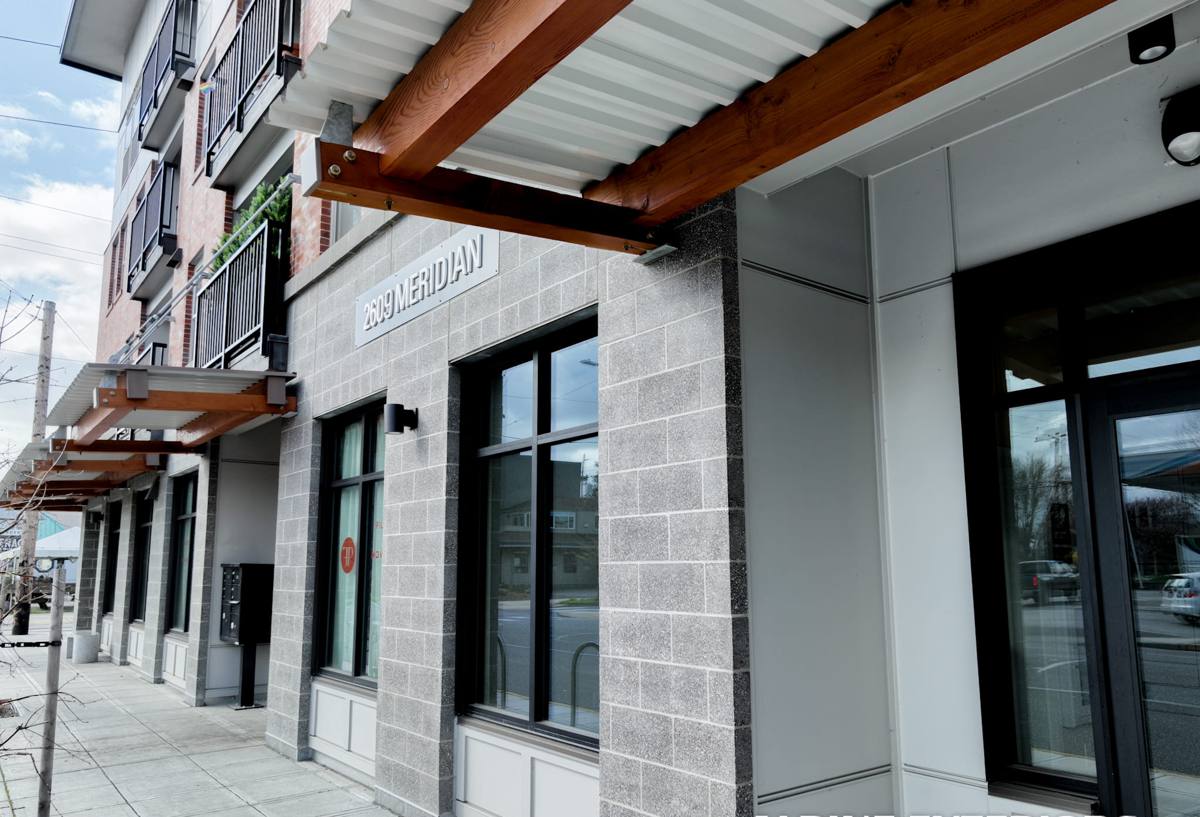
What Blanchard's Climate Actually Does to a New Window Install
Whatcom County weather isn't dramatic, it's relentless. That's the part builders from drier regions sometimes underestimate.
- Driving rain pushed by wind off the water finds any gap in flashing or sealant, especially on west- and south-facing walls exposed to weather coming across open ground near Blanchard.
- Salt air off the bay accelerates corrosion on unprotected fasteners, low-grade hardware, and uncoated aluminum trim over time.
- Moss and algae take hold anywhere moisture sits — sill areas, head flashing laps, and shaded elevations are the first places you'll see it if drainage details are wrong.
- Extended damp season means any water that gets behind the window doesn't get a chance to dry out quickly. A minor flashing mistake that would be a non-issue in a dry climate becomes rot in a wet one.
None of this is exotic — it's just constant. New-construction windows in this area need to be installed assuming they'll see months of sustained moisture exposure every single year, not occasional storms.
What a Correct New-Construction Window Install Involves
New construction gives you an advantage retrofit work doesn't: full access to the rough opening, sheathing, and building wrap before anything is closed in. That access only pays off if it's used correctly.
Rough Opening Prep
Openings get checked for square, level, and correct size before the window ever shows up on site. We also confirm the opening is properly sized for the window's nailing flange or block-frame design — undersized or oversized openings cause installers to compensate with shims and extra sealant, which is exactly how leaks start.
Water-Resistive Barrier and Flashing Sequence
This is the part that actually keeps water out for the next 30-plus years, and it's also the part that's invisible once siding goes on. The sequence matters:
- Sill pan flashing installed first, sloped to drain outward, never inward toward the framing.
- Jamb flashing lapped over the sill pan on both sides.
- Window set into the opening, checked for level, plumb, and square before a single fastener goes in.
- Head flashing installed last, lapped over the building wrap above it — so water always sheds down and over, never behind.
- All laps taped or sealed per the water-resistive barrier manufacturer's instructions, not just "however the crew usually does it."
Every lap in this sequence follows shingle-style logic: whatever's higher on the wall overlaps whatever's below it, so gravity always moves water outward instead of trapping it.
Fastening and Sealant
Corrosion-resistant fasteners are non-negotiable this close to salt air — the wrong hardware can start showing rust streaks on trim within a couple seasons. Sealant gets used at specific points in the assembly (not as a substitute for correct flashing) and needs to stay flexible through freeze-thaw cycles without cracking.
Interior Air Sealing
New construction also lets you seal the interior side of the rough opening with low-expansion foam or backer rod before insulation and drywall go in. This step gets skipped more often than it should — it doesn't affect water intrusion, but it's a real factor in draft, energy loss, and condensation control once the house is occupied.
Choosing Window Products for a New Blanchard Build
Product choice matters less than installation quality, but it's not irrelevant. For new construction in this climate we generally steer toward vinyl or fiberglass frames with a proven track record in wet, salt-influenced air, and we're selective about clad-wood products — wood core windows can perform well, but they raise the maintenance bar and are less forgiving of any gap in the finish or flashing detail. That's a trade-off we lay out honestly rather than push one direction, since it comes down to the look you want on the finished home versus the upkeep you're willing to commit to.
| Frame Material | Moisture/Salt Performance | Maintenance | Typical Fit |
|---|---|---|---|
| Vinyl | Strong — won't corrode or rot | Low | Budget-conscious new builds, rentals |
| Fiberglass | Excellent — dimensionally stable in wet/dry cycling | Low | Long-term owner-occupied homes |
| Aluminum-clad wood | Good exterior protection, interior wood still needs care | Moderate-High | Design-forward builds prioritizing wood interior look |
| Bare wood | Weakest against sustained damp exposure without diligent upkeep | High | Historic-style or architecturally specified builds only |
Glass package matters too. For Blanchard's mix of overcast winters and bright summer glare off the water, a double-pane, low-E unit with argon fill is the standard baseline; triple-pane is worth discussing if the build is aiming for higher energy performance or sits on an especially exposed lot.
Our Process for New-Construction Window Installs
We work new-construction jobs on the builder's or homeowner's schedule, coordinated with framing and dry-in timelines rather than as an afterthought.
- Rough opening review before windows arrive on site, flagging any framing corrections needed.
- Sill pan and flashing installed per manufacturer specification and matched to the specific water-resistive barrier system used on the build.
- Every window set, shimmed, and fastened to spec — checked individually, not batch-installed on assumption.
- Photos of flashing and sill pan work taken before it's covered by siding, so there's a record of what's behind the finish.
- Final walkthrough checking operation, seal, and trim on every unit before we call the job done.
Pre-Install Checklist We Run on Every Blanchard Job
- Rough openings measured and squared
- Water-resistive barrier condition confirmed intact around each opening
- Sill pan slope verified before window is set
- Flashing lap sequence confirmed (sill, jamb, head — in that order)
- Fastener type confirmed corrosion-resistant for coastal exposure
- Interior air sealing scheduled before insulation closes the wall
Why It Matters to Hire a Crew That Already Works Blanchard
Flashing and water management principles are the same everywhere in theory. In practice, the details that actually get tested — how a wall performs through a wet Whatcom County winter, which elevations take the worst of the driving rain, how fast moss establishes on a shaded north wall — are things you learn from doing the work here, not from a manual. A crew that's installed windows on other builds in this area already knows which details deserve extra attention on your job before problems show up, instead of learning it on your house.
Local presence also matters for warranty and follow-up. If a question comes up two winters after move-in, you want a company that's still working in the area and can look at it in person — not a crew that did one job and left the region.
Common Mistakes We See on New-Construction Window Jobs
Most window problems on new builds don't come from a bad product — they come from a rushed or out-of-sequence install. The ones we see most often:
- Sealant used to compensate for a missing or incorrect flashing lap, instead of the flashing being fixed.
- Head flashing installed under the building wrap instead of over it, which traps water instead of shedding it.
- Sill pans installed flat or sloped the wrong direction, so water pools instead of draining out.
- Standard fasteners used where corrosion-resistant hardware was called for, leading to rust staining down the trim.
- Windows set without checking square, causing operational issues that don't show up until the house has settled.
Every one of these is preventable with a careful, in-sequence install — which is the whole point of doing it right while the wall is still open.
Timeline and Coordination
New-construction window installs typically happen right after dry-in, once the building wrap is on and roofing is far enough along to keep the opening protected. We coordinate directly with the builder or general contractor on scheduling so the install doesn't hold up siding or interior framing behind it. On a typical single-family Blanchard build, window installation itself usually takes a few days depending on the number of openings and any custom or oversized units, with flashing and inspection built into that timeline rather than rushed at the end.
If you're framing a new home in Blanchard or planning one, we're happy to walk the site, look at your window schedule, and talk through flashing details before openings are even framed. Reach out for a free, no-pressure estimate — the form below gets you started.