 Chuckanut Exterior
 Board & Batten Siding Built for Life on Lake Samish
Homes around Lake Samish sit in a pocket of the Chuckanut area where forest canopy, lake humidity, and long shaded stretches of yard combine to keep siding wet longer than it stays wet almost anywhere else in Whatcom County. That combination — moisture that lingers instead of drying off quickly, plus a moss season that can run most of the year in the shadier lots — is exactly what board & batten siding needs to be engineered against if it's going to hold up. We install board & batten siding for homeowners around the lake, and this page covers what that job actually involves here, not in general.
Board & batten is a popular look for lake and cabin-style homes because the vertical lines read as rustic and substantial without looking busy. It works well on Lake Samish homes with A-frame or cabin rooflines, and it pairs naturally with the wood and stone accents a lot of owners already have. The look is only half the story, though — the material and the install method matter more here than they would on a dry, open lot in town.
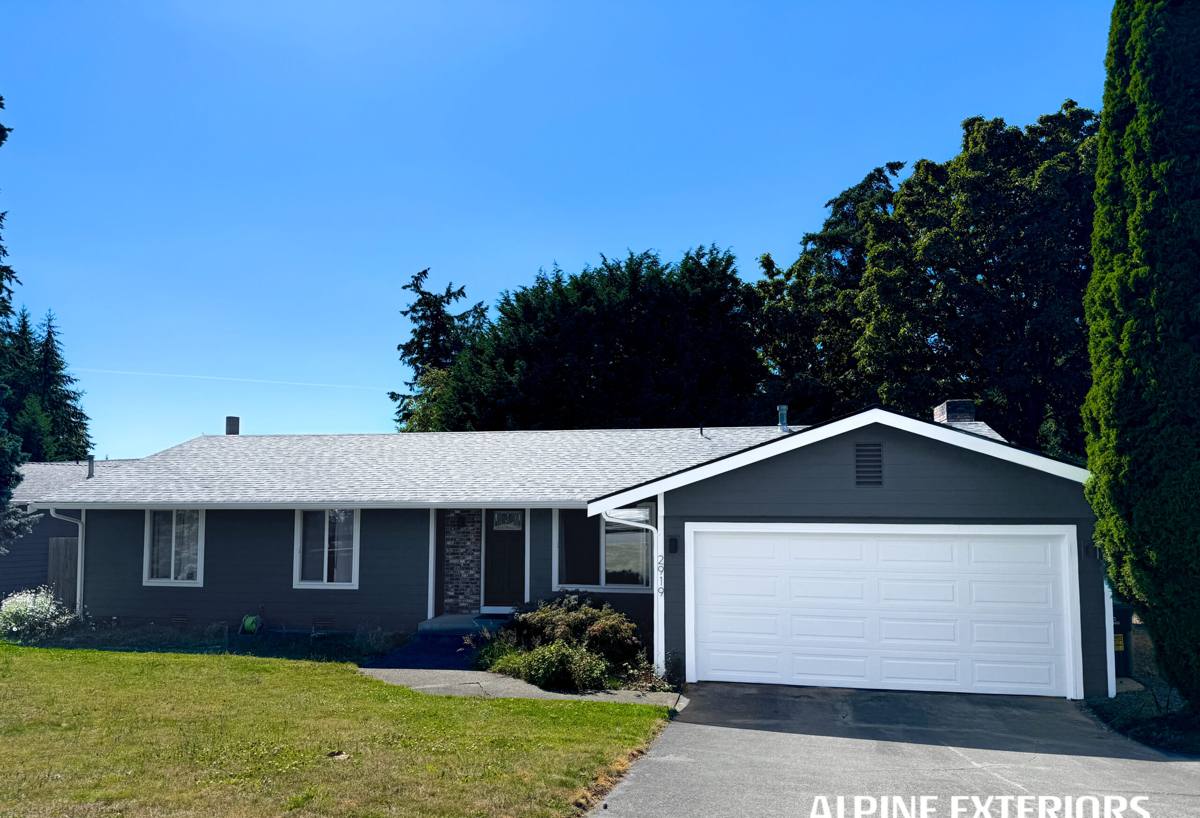
What Lake Samish's Climate Actually Does to Siding
Salt air, driving rain, and shade
Chuckanut's coastal exposure brings salt-laden air and wind-driven rain that pushes moisture into seams and fastener points that would stay dry in a more sheltered inland setting. Around the lake itself, tree cover adds a second layer of the same problem: less direct sun and airflow means siding surfaces — especially north- and east-facing walls — take longer to dry out after every rain event.
Moss season
Moss and algae growth is the most visible sign of that slow-drying pattern. On wood, LP SmartSide, or poorly primed panel products, sustained moss growth traps moisture against the surface and accelerates rot at the panel edges and battens — the exact places where board & batten siding is most vulnerable if it isn't detailed correctly. A material that resists moisture absorption, combined with an install that lets water drain and air move behind the panels, is what keeps that cycle from ever starting.
Temperature swings and settling
Whatcom County's damp winters and drier summers put steady expansion-and-contraction stress on siding and its fasteners. Battens that are face-nailed without room to move, or caulked at every seam instead of engineered to shed water, tend to crack and open gaps within a few years in this climate — which is when moisture starts getting behind the siding instead of running off it.
What a Correct Board & Batten Install Requires Here
Board & batten looks simple from the street, but the assembly behind it is what determines whether it lasts 10 years or 40 in a lake environment. On every board & batten job around Lake Samish, we build in:
- A drainage plane (weather-resistive barrier) installed and lapped correctly before any siding goes up
- Furring strips or a rainscreen gap so water that gets past the battens can drain and air can dry the wall cavity
- Factory-primed, factory-finished panels rather than field-primed material, so cut edges and fastener points are the only places exposed to raw material
- Batten spacing and fastening that allows for normal material movement instead of locking panels rigid
- Correct fastener type and placement — the wrong nail or the wrong depth is one of the most common causes of early failure on vertical siding
- Flashing and sealed penetrations at every window, vent, and utility penetration, since those are the points where moisture actually gets in
Skip any one of these and the siding can still look right for a year or two while the real damage builds behind it, which is why we don't treat board & batten as a quick face-nail job.
Why We Use James Hardie for Board & Batten
We install James Hardie fiber cement exclusively — we don't offer vinyl, LP SmartSide, Cemplank, Allura, primed spruce, or cedar board & batten, and that's a deliberate standard, not a limitation of what we can source.
Wood board & batten looks great initially, but it's the highest-maintenance option in a lake climate: it needs regular refinishing, and any gap in that maintenance schedule around Lake Samish's moisture and moss exposure shortens its life fast. LP SmartSide and other engineered wood panels perform better than raw wood but are still wood-fiber based, meaning cut edges and any breach in the factory coating can start absorbing moisture — a real risk on shaded, damp lots. Vinyl board & batten avoids moisture absorption but it's a thin material that can warp or crack in temperature swings and doesn't hold paint, so damaged sections are hard to blend in.
James Hardie's fiber cement is engineered specifically for climates like this one — it's non-combustible, doesn't absorb moisture the way wood-based products do, and holds its factory ColorPlus finish for years without repainting. Hardie's HZ5 product line is built for exactly the wet, coastal Pacific Northwest conditions Lake Samish sits in. It's also backed by a strong transferable warranty, which matters on lakefront and vacation properties that change hands more often than typical in-town homes.
Material Comparison for Board & Batten
| Material | Moisture Behavior | Maintenance | Typical Lifespan Here |
|---|---|---|---|
| James Hardie fiber cement | Does not absorb moisture; factory finish resists moss staining | Occasional wash; no repainting for years | 30+ years installed to spec |
| Cedar / primed spruce | Absorbs moisture; prone to rot at cut edges and battens | Refinish every 3-5 years | 15-25 years with diligent upkeep |
| LP SmartSide | Wood-fiber core; vulnerable if coating is breached | Periodic caulking and paint touch-up | 20-30 years, install-sensitive |
| Vinyl | Doesn't absorb water but can trap it behind panels | Low, but damage isn't repairable in place | 20-30 years; can warp with temp swings |
How We Approach a Lake Samish Job
Assessment
We start by walking the exterior and identifying the wall faces getting the most moisture and shade exposure — those get the most attention on drainage detailing. We also check existing sheathing and framing for any moisture damage already underway, which is common on older lake homes before the siding ever comes off.
Prep and installation
Old siding comes off, the wall is inspected and repaired where needed, and the weather barrier and drainage plane go on before a single Hardie panel is hung. Battens are set with correct spacing and fastened to allow for material movement. Every window, door, and penetration gets flashed and sealed as part of the install, not as an afterthought.
Finish and walkthrough
We finish with a full walkthrough so the homeowner understands what was done and what basic upkeep (an occasional wash to keep moss from taking hold) looks like going forward.
Why It Matters That We Already Work Lake Samish
A crew that hasn't worked lake-adjacent properties in Whatcom County can underestimate how much drying time a shaded wall actually gets, or default to a standard install that's fine in a dry inland neighborhood but undersized for the moisture load here. We already know which wall orientations around the lake need extra drainage detail, how permitting works for this part of unincorporated Whatcom County, and what access and staging look like on lake lots that don't always have easy driveway or equipment access. That local familiarity shows up in fewer surprises during the job and a siding system that's actually matched to the site instead of a generic install.
What to Ask Before Hiring for a Board & Batten Job
- Will you install a drainage plane and furring/rainscreen gap, or face-nail directly to the sheathing?
- What fastener type and spacing will you use, and why?
- Is the material factory-primed and factory-finished, or will it be field-primed on site?
- How will you flash and seal windows, vents, and other penetrations?
- What does the warranty actually cover, and is it transferable if the home sells?
- Have you installed siding on other lake or shaded properties in this area before?
Any contractor should be able to answer these clearly and specifically — vague answers on drainage detailing or fastening are the biggest red flag on a board & batten quote.
Get a Straightforward Estimate
If you're weighing board & batten siding for a home on or near Lake Samish, we're glad to come take a look, walk the exterior with you, and give you a clear, no-pressure estimate based on what your specific walls and exposure actually need. Use the form below to get started.