 Chuckanut Exterior
 New Roof Installation for Happy Valley Homes
Happy Valley sits close enough to the water and the tree line that its roofs take a different kind of beating than roofs a few miles inland. Homes here deal with salt-laden air moving in off the bay, long stretches of driving rain through the fall and winter, and a moss season that can run most of the year in shaded, north-facing yards. A roof that's installed without those specific conditions in mind will underperform here even if the same materials would hold up fine somewhere drier or more sheltered. When we install a new roof in Happy Valley, we're not just putting on new shingles — we're building a system that's matched to this particular corner of Whatcom County.
This page is about one thing: full new roof installation for Happy Valley properties. Not repairs, not general roofing information — the specific job of removing an old roof and putting on a correctly built new one, and what that means for a home in this neighborhood.
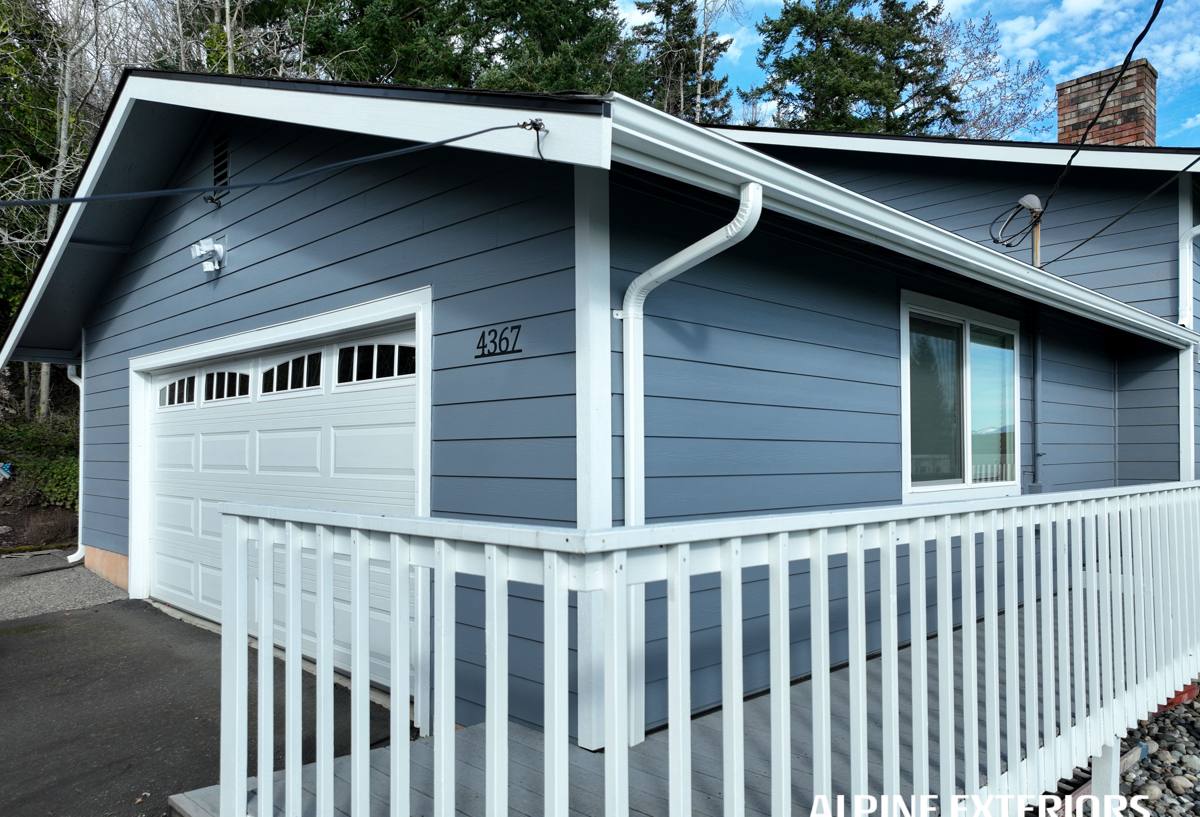
What Happy Valley's Climate Actually Does to a Roof
Salt Air
Airborne salt accelerates corrosion on anything metal — nails, flashing, gutter fasteners, vent caps. Cheaper or mismatched fasteners can start rusting years before the roofing material itself is due for replacement, which leads to leaks around penetrations long before the shingles fail. This is a bigger factor for homes closer to the water, but salt-carrying wind can reach well inland on windy days, so Happy Valley properties should assume some exposure even if they're not right on the shoreline.
Driving Rain
Rain that comes in at an angle, pushed by wind off the water, behaves differently than a straight vertical downpour. It gets up under shingle tabs, drives into exposed nail heads, and finds gaps at valleys, eaves, and wall-to-roof transitions that a calmer rain would never reach. A roof built for driving rain needs more attention to underlayment coverage, valley detailing, and flashing laps than a standard installation in a milder climate.
Moss
Moss doesn't just look bad — it holds moisture against the roofing material, works its way under shingle edges as it grows, and can lift tabs enough to let water in. Shaded roof sections, north-facing slopes, and areas near overhanging trees are the most at risk. A new roof installation is the best time to address moss-prone design issues, because once shingles are on, your options for prevention are limited to surface treatments and maintenance.
What a Correctly Installed New Roof Includes
A new roof is a system, not a single product. Every layer has a job, and skipping or shortcutting one of them is where most premature failures start — especially in a climate like this one.
- Tear-off and deck inspection: Full removal of the old roofing so the deck underneath can actually be checked, not covered over. Any soft, rotted, or delaminated sheathing gets replaced before anything new goes down.
- Ice and water shield at vulnerable areas: Self-adhering waterproof membrane at eaves, valleys, and around penetrations — the spots where driving rain and moss are most likely to cause trouble.
- Synthetic underlayment across the field: A full secondary water barrier under the shingles, which matters more here than in drier climates because it's the backup layer when wind-driven rain gets past the surface material.
- Corrosion-resistant flashing and fasteners: Matched to the salt exposure in this area rather than whatever is cheapest, especially at chimneys, sidewalls, and roof-to-wall transitions.
- Proper ventilation: Balanced intake and exhaust airflow so moisture from inside the home doesn't get trapped in the attic, which contributes to deck rot and shortens the life of the roofing above it.
- Correct shingle or material installation: Proper nailing pattern, exposure, and sealing so the manufacturer's wind and water warranties actually apply — a roof installed off-spec can void coverage even if it looks fine at first.
Choosing Roofing Materials for This Neighborhood
There's no single "best" roofing material for every home — the right choice depends on the roof's slope, shading, sun exposure, and your budget and maintenance expectations. Here's how the common options compare for a Happy Valley property specifically.
| Material | How it handles this climate | Maintenance considerations |
|---|---|---|
| Architectural asphalt shingles | Good wind and rain performance when installed with proper underlayment and flashing; widely available warranty support | Shaded slopes benefit from algae-resistant granules to slow moss growth |
| Standing seam metal | Sheds driving rain very well and stands up to wind; needs corrosion-resistant fasteners and coatings given salt exposure | Low moss risk on smooth panels; occasional fastener and seam checks |
| Synthetic/composite shingles | Resists moisture absorption well; performs steadily across wet, humid stretches | Moderate; product-specific cleaning guidance should be followed |
| Wood shake | Requires more upkeep in a damp, moss-prone climate; moisture retention is a real long-term concern | Higher maintenance burden — we'll walk you through the trade-offs honestly before you commit |
We'll talk through these options against your roof's actual exposure — how much shade it gets, which slopes face the water, how much wind it typically takes — rather than pushing one material as a default. The goal is a roof that fits your home's specific site conditions, not the easiest thing to sell.
Our Installation Process
1. On-Site Assessment
We start by walking the roof and the attic, noting slope, shading patterns, existing ventilation, and any signs of past moss or water intrusion. This is also when we identify areas that need extra attention because of Happy Valley's exposure — north-facing sections, low-slope valleys, anything near mature trees.
2. Written Scope and Material Plan
You get a clear, itemized plan: what's being torn off, what underlayment and flashing system is going in, what material you're choosing and why, and a realistic cost range. No vague line items.
3. Tear-Off and Deck Repair
Old roofing comes off completely so the deck can be inspected and repaired where needed. We don't install new roofing over damaged or questionable decking — it's the one step that's genuinely non-negotiable, since a new roof over a bad deck fails early no matter what's installed on top.
4. Waterproofing and Underlayment
Ice and water shield goes in at eaves, valleys, and penetrations first, followed by underlayment across the full field. Given how much of this region's roof damage traces back to wind-driven rain rather than straight-down rain, this layer gets real attention, not a quick pass.
5. Flashing, Ventilation, and Final Material Installation
Flashing goes in at every transition point, ventilation is set to balance intake and exhaust, and the finish material — shingles, metal, or composite — is installed to manufacturer spec so warranties stay valid.
6. Cleanup and Walkthrough
Magnetic sweep for stray fasteners, full site cleanup, and a walkthrough where we point out anything you should keep an eye on — including moss-prone spots that will need occasional attention.
Timing Your Roof Replacement Around the Weather
In Whatcom County, the driest stretches of the year give us the most reliable install windows, and scheduling around them reduces the chance of weather delays mid-project. That said, roof replacement isn't purely optional scheduling when a roof is actively failing — a leaking or storm-damaged roof shouldn't wait for a "better" season. We'll give you a straight answer on whether your timeline should be climate-driven or urgency-driven based on the actual condition of your roof.
Signs a Happy Valley Roof Needs Full Replacement, Not Repair
- Granule loss heavy enough to see bare patches on multiple slopes, not just one worn section
- Moss that's returned repeatedly despite cleaning, especially if it's lifting shingle edges
- Soft spots or sagging in the deck when walked, felt from inside the attic, or visible from the ground
- Rusted or deteriorating flashing at chimneys, valleys, or sidewalls
- Leaks showing up in more than one location, or in new locations after previous repairs
- A roof at or past the upper end of its material's expected service life, especially if it was never upgraded with proper underlayment
If a roof is only showing an isolated problem — one damaged section, one flashing failure — a targeted repair may be the more sensible move, and we'll tell you that directly rather than steering every conversation toward a full replacement.
Why Local Experience in Happy Valley Matters
A crew that already works in this neighborhood knows which slopes tend to hold moss, which sides of a roof take the worst of the wind-driven rain, and how salt exposure tends to show up in flashing and fasteners here specifically. That local pattern recognition shortens the assessment phase and reduces the chance of missing a problem that isn't obvious on a first look. It also means we're not guessing at material choices based on generic climate data — we're basing them on how roofs in this exact area actually hold up over time.
What to Expect for Cost
Roof replacement cost depends on roof size, pitch, material choice, deck condition once we're in there, and how much flashing and ventilation work is needed. Rather than quote a number that doesn't mean much without seeing your roof, we'll give you a clear written estimate after the on-site assessment — broken down by scope, not a single lump figure. Steeper or more complex rooflines, and homes needing significant deck repair, will naturally run higher than a simple, accessible, single-slope roof in good structural shape.
If your roof is showing wear, moss, or age, or you're planning ahead rather than waiting for a leak, we're happy to take a look. Reach out for a free, no-pressure estimate using the form below — we'll walk the roof, talk through your options honestly, and give you a straight answer on what your home actually needs.