 Chuckanut Exterior
 Siding Built for Fairhaven's Specific Climate
Fairhaven sits close enough to the water that salt air is a daily fact of life for the homes here, not an occasional nuisance. Add Whatcom County's long wet season, driving rain that comes in sideways off Bellingham Bay, and a moss season that can stretch from fall through spring, and you have a set of conditions that are genuinely hard on exterior materials. Siding in Fairhaven doesn't just need to look good on installation day — it needs to hold its finish, resist moisture intrusion, and shrug off organic growth for decades in an environment that punishes anything less.
We install James Hardie fiber cement exclusively across our Chuckanut service area, and Fairhaven is one of the neighborhoods where that decision matters most. This page walks through what local homes actually need from a siding installation, what a correct job looks like step by step, and why the installer you choose matters as much as the product itself.
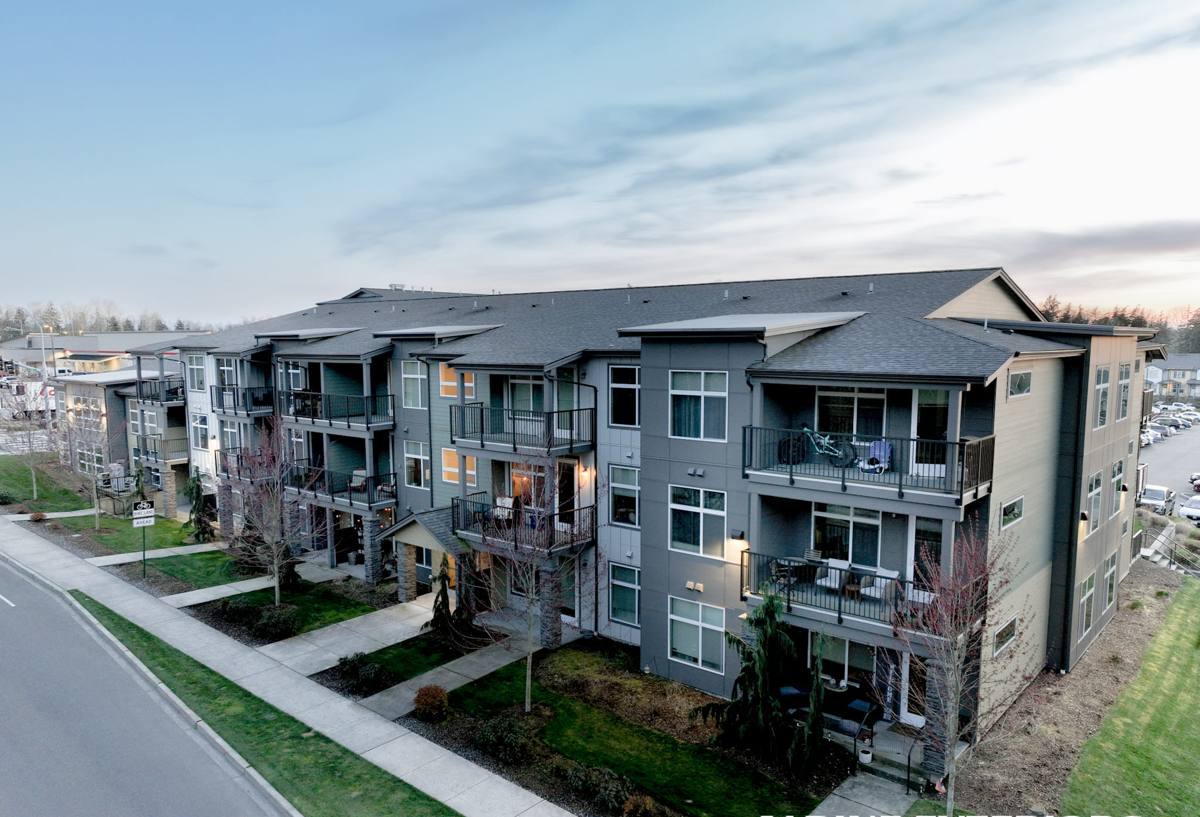
Why Salt Air and Moisture Change the Equation
Salt-laden air accelerates corrosion of fasteners and metal trim, and it also speeds up the breakdown of lower-grade coatings and finishes. Wood-based siding products absorb ambient moisture more readily in a salt-air environment, which stresses paint film and adhesive bonds over time. Vinyl siding can hold up physically in salt air, but it wasn't designed to be painted or refinished, so once its factory color fades or chalks, the only fix is replacement — not a repaint.
Driving rain adds a second layer of difficulty. Wind-blown rain doesn't just fall on a wall, it gets pushed into laps, seams, and butt joints. A siding system that isn't installed with the right clearances, flashing details, and drainage plane behind it will eventually let water behind the cladding, and once that happens the sheathing and framing pay the price long before the siding itself shows visible damage.
Moss and Organic Growth
A long moss season means extended periods where siding surfaces stay damp and shaded, especially on north-facing walls and under eaves. Some siding materials are more hospitable to moss, algae, and mildew growth than others, depending on surface texture and how well the material sheds water. James Hardie's factory-applied ColorPlus finish is engineered to resist fading and to be less hospitable to this kind of growth than a field-painted surface, which matters a great deal on homes that don't get much direct sun exposure for months at a time.
What a Correct Siding Installation Involves
Fiber cement siding is only as good as the installation behind it. A rushed or corner-cutting install can undermine even the best material. Here's what we consider non-negotiable on every Fairhaven project:
- Removal of existing siding down to the sheathing, so we can inspect for hidden rot, moisture damage, or framing issues before covering anything up
- Repair or replacement of any compromised sheathing, framing, or window bucks found during tear-off
- Installation of a code-compliant weather-resistive barrier, lapped correctly from the bottom up so water sheds outward, not inward
- Proper flashing at every penetration — windows, doors, vents, hose bibs, electrical fixtures, and roof-to-wall transitions
- Correct fastener placement, spacing, and depth per the James Hardie installation manual, not just "close enough"
- Rain screen or drainage gap detailing where appropriate, giving incidental moisture a path to escape
- Factory-mitered or properly caulked corners and trim, sized and sealed to shed water rather than trap it
- Final inspection of caulking, paint touch-up at cut edges, and clean site cleanup
Every one of these steps matters more in a marine climate than it would somewhere dry. Skipping flashing details or using generic fasteners might not show a problem in year one — but in a Fairhaven winter, it shows up in year five or six as staining, soft trim, or a moisture problem behind the wall.
Why We Install Only James Hardie
We made a deliberate decision to standardize on James Hardie fiber cement and not offer vinyl, LP SmartSide, Cemplank, Allura, or unfinished wood siding like primed spruce or cedar. This isn't a marketing position — it's a professional standard we hold ourselves to because of what we've seen matter most in this climate over the long run.
What Sets Hardie Apart Here
| Factor | Why It Matters in Fairhaven |
|---|---|
| Non-combustible material | Fiber cement doesn't feed a fire the way wood-based products can, a meaningful consideration for insurance and safety |
| ColorPlus factory finish | Baked-on finish resists fading and chalking better than field-applied paint, holding up through repeated wet-dry cycles |
| Climate-engineered HZ product line | Formulated specifically for moisture-prone climates like ours, rather than a one-size-fits-all national product |
| Dimensional stability | Fiber cement doesn't swell, cup, or warp the way wood products can when exposed to repeated moisture cycling |
| Transferable warranty | Backed by a strong manufacturer warranty that can transfer to a future homeowner, supporting resale value |
We're not saying every alternative product is unusable — vinyl, engineered wood, and other fiber cement brands all have their place and their advocates. But we chose to specialize rather than offer everything, and Hardie's combination of moisture performance, finish durability, and non-combustibility is why it's the only system we put our name behind.
Our Installation Process for Fairhaven Homes
We follow the same disciplined process on every Fairhaven job, adjusted for the specifics of the home:
- On-site assessment — we walk the exterior, check existing siding condition, look for signs of moisture damage, and note exposure factors like sun, shade, and prevailing wind direction
- Written scope and product selection — we help you choose the right Hardie product line, plank width, and ColorPlus color, and put the full scope of work in writing
- Tear-off and inspection — old siding comes off, sheathing gets inspected, and any needed repairs are documented and priced before we move forward
- Weather barrier and flashing installation — the drainage plane goes on correctly the first time, since this layer is invisible once siding goes up
- Siding installation to manufacturer spec — proper nailing patterns, clearances, and joint treatment throughout
- Trim, caulking, and touch-up — corners, trim boards, and cut-edge sealing finished to a clean standard
- Final walkthrough — we go over the finished job with you before calling it complete
Local Exposure Conditions Worth Planning Around
Not every wall on a Fairhaven home faces the same conditions. Homes closer to the water or on more exposed lots take a heavier dose of salt air and wind-driven rain on their west and south-facing walls. Shaded north walls and areas under heavy tree cover tend to hold moisture longer and are more prone to moss and mildew buildup. A good installer accounts for this wall by wall — not with different materials, but with attention to flashing, ventilation, and drainage detailing where the exposure is worst.
Common Warning Signs Worth Watching For
- Soft or spongy siding when pressed, especially near the bottom courses or around window trim
- Persistent moss or algae staining that returns quickly after cleaning
- Paint that's peeling, bubbling, or chalking heavily, particularly on sun-exposed walls
- Visible gaps, cracks, or separated caulking at trim and corner boards
- Warping, cupping, or bowing in individual siding boards
- Water staining on interior walls near exterior corners, which can indicate moisture already behind the siding
If you're seeing any of these on a Fairhaven home, it's worth an inspection sooner rather than later — moisture problems behind siding tend to get more expensive the longer they're left unaddressed.
Cost Factors for a Fairhaven Siding Project
Every home is different, but a few factors consistently drive cost on projects in this area more than in drier inland climates:
| Cost Factor | Why It Affects Fairhaven Projects |
|---|---|
| Sheathing/framing repair | Homes with prior moisture intrusion often need hidden repairs discovered only during tear-off |
| Home size and complexity | More corners, dormers, and trim details mean more flashing and labor time |
| Product line and finish | Different Hardie plank profiles and ColorPlus colors carry different material costs |
| Access and site conditions | Sloped lots, tight setbacks, and limited staging areas common in Fairhaven affect labor time |
| Existing siding removal | Multiple layers of old siding or extensive tear-off add disposal and labor cost |
We don't quote a project without seeing it in person first — broad averages don't account for what's actually going on behind your existing siding, and we'd rather give you an accurate number than a low one that changes later.
Why Hiring a Crew That Already Works Fairhaven Matters
Siding installation isn't just about following a manual — it's about judgment calls on a specific home in specific conditions. A crew that regularly works Fairhaven and the surrounding Chuckanut area already understands which walls tend to take the worst weather exposure, how local moisture patterns show up in older housing stock, and what flashing and drainage details actually hold up here versus in a drier climate. That experience shows up in the small decisions made on-site — where to add extra flashing, how to detail a tricky window return, when to flag a sheathing repair rather than cover it up.
It also matters for accountability. A local company with a track record in Whatcom County has a reputation to protect in the community, and that's a different incentive structure than an out-of-area crew moving on to the next region once the job is done.
Ready to Talk About Your Fairhaven Home
If your Fairhaven home's siding is showing its age, holding onto moisture it shouldn't, or you're simply planning ahead for a replacement, we're happy to take a look and walk you through what we'd recommend. There's no pressure and no cost to have us out — just a straight answer about what your home needs and what it would take to do the job right. Fill out the form below to request your free estimate.