 Chuckanut Exterior
 Building Decks for Fairhaven's Marine Climate
Fairhaven sits close enough to the water that salt air is part of daily life, not an occasional nuisance. Combine that with Whatcom County's long stretch of driving rain and the moss season that follows it, and you've got a set of conditions that will find every weak point in a deck within a few years. A deck built to a generic national spec — the kind you'll find in a big-box how-to guide — is not built for this. A deck built for Fairhaven has to account for airborne salt corroding metal, standing moisture rotting wood from the inside out, and moss and algae turning walking surfaces slick and dark by late fall.
This page is about custom deck building specifically for Fairhaven homes. Not a generic decking overview — the actual decisions that matter here: what materials hold up, how the structure needs to be built, what fasteners and hardware actually survive this environment, and how a crew that already works in this neighborhood approaches the job differently than one that doesn't.
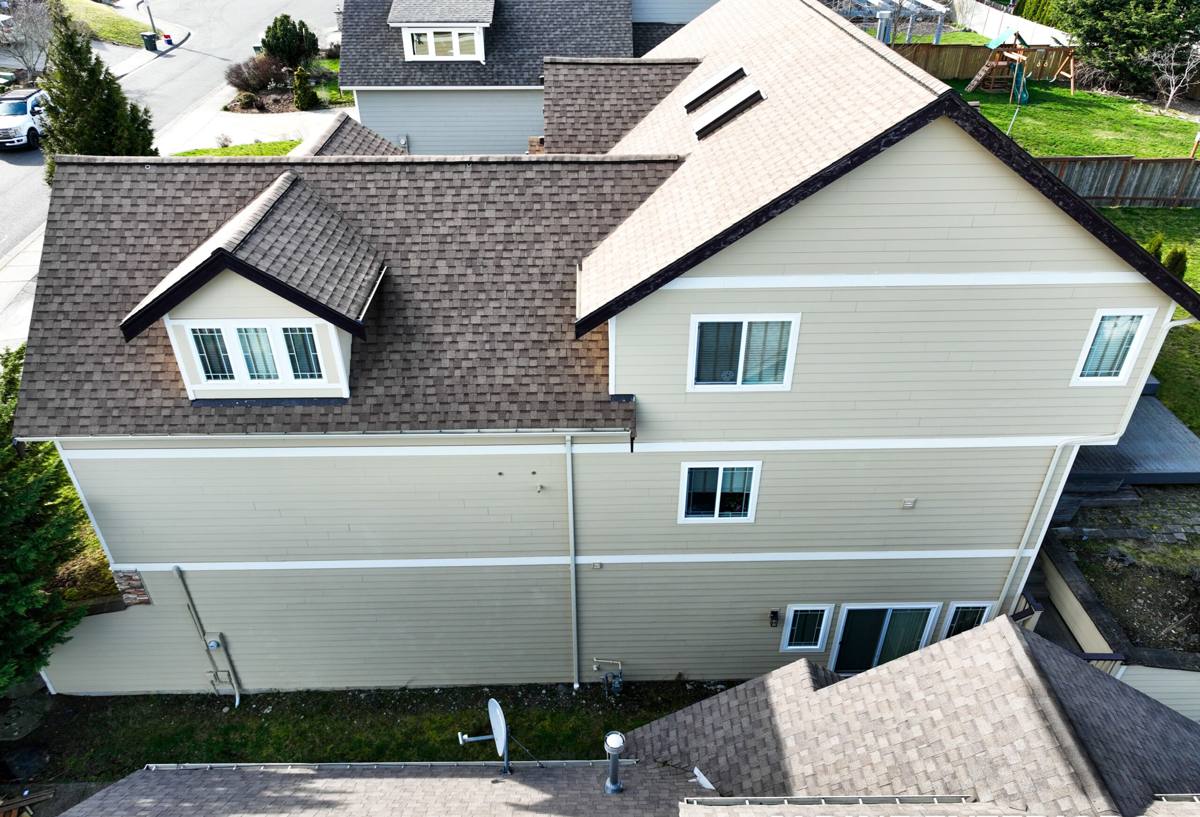
What Fairhaven Homes Need From a Deck
Every deck we build in this area has to answer to the same three stressors, in some combination:
- Salt-laden air — accelerates corrosion on any exposed metal, especially fasteners, brackets, and railing hardware that isn't rated for it.
- Frequent, driving rain — pushes water into joints, ledger connections, and end grain far more aggressively than occasional rainfall would, and it does it for months at a stretch.
- Shade and moisture that don't dry out — many Fairhaven lots have mature trees or hillside shading, which means decking surfaces and the structure underneath stay damp longer, which is exactly what moss, algae, and rot need to take hold.
None of these are exotic problems. They're the same three things every deck in this part of Whatcom County eventually deals with. The difference between a deck that looks good for five years and one that still looks good in twenty comes down to how these three stressors were planned for at the design stage, not patched around later.
Lot Conditions We Look At Before We Design Anything
Before we draw up a plan, we walk the site and look at how water actually moves across it — where it pools, where the sun does and doesn't reach, and how close the structure will sit to grade. A deck tucked under tree cover on the north side of a house needs a different drainage and material strategy than one out in open sun on a south-facing slope, even if they're two blocks apart in the same neighborhood.
Framing and Structure: Getting the Foundation Right
The framing is the part of a deck nobody sees once it's finished, and it's also the part that determines whether the deck is still safe and level in fifteen years. In a climate this wet, the structural decisions that matter most are:
Footings and Post Bases
Footings need to be sized and set below frost depth and set to bear on undisturbed, well-draining soil — not backfill. Post bases should hold the post above the concrete and off standing water, since end-grain wood sitting in a wet footing is one of the most common places we find rot on decks we're asked to repair or rebuild.
Ledger Board Attachment and Flashing
Where a deck attaches to the house, the ledger board and its flashing are the single most important waterproofing detail on the whole project. Done wrong, water gets behind the ledger and works its way into the house's rim joist and wall sheathing — a slow, hidden kind of damage that's expensive to fix once it's found. Done right, flashing sheds water away from the connection entirely, with a gap or drainage plane behind the ledger so any moisture that does get in has somewhere to go.
Joists, Beams, and Fasteners
We frame with lumber rated for ground contact or exterior exposure where it's called for, and we use structural connectors and fasteners rated for the coastal, high-moisture environment — not the standard interior-grade hardware that shows up in a lot of national lumber-yard packages. Mixing corrosion-resistant fasteners with the wrong-grade connector plates is a common shortcut that causes galvanic corrosion between dissimilar metals, which weakens the connection from the inside where you can't see it happening.
Decking Material Options for a Salt Air, Rain-Heavy Climate
There's no single "best" decking material — there's a best material for a given budget, look, and maintenance appetite. Here's how the common options actually perform under Fairhaven conditions:
| Material | How It Handles Salt Air & Rain | Maintenance | Typical Lifespan |
|---|---|---|---|
| Pressure-treated wood | Good if properly sealed and re-sealed; end grain and fasteners are the weak points | Annual cleaning, re-sealing every 1-2 years | 10-15 years with upkeep |
| Cedar / natural wood | Naturally rot-resistant but still needs sealing against driving rain and moss growth | Regular cleaning, periodic sealing/staining | 15-20 years with upkeep |
| Composite decking | Handles moisture and salt air well; doesn't rot, but surface can still grow moss/algae in shaded, damp spots | Periodic washing; no sealing or staining needed | 25-30+ years |
| PVC/capped polymer decking | Best moisture and salt resistance of the common options; fully sealed surface | Occasional washing | 25-30+ years |
We don't push one product line over another as a matter of policy — the honest trade-offs are cost up front versus maintenance over time, and how much the natural wood look matters to the homeowner. What we won't do is install a wood species or composite product without disclosing what upkeep it'll actually need in this climate, because a low-maintenance sales pitch that doesn't hold up against real Whatcom County weather isn't doing anyone a favor.
Railings, Fasteners, and Hardware That Resist Corrosion
Railings and hardware are usually the first thing to show wear on a coastal deck, often years before the decking itself needs attention. Standard zinc-coated fasteners and connectors will streak, stain, and eventually corrode faster near the water. We spec stainless steel or coated hardware rated for coastal exposure on connections that matter — post bases, structural brackets, and any fastener exposed to weather — and we're deliberate about not mixing metal types that react against each other.
For railing systems, metal cable and aluminum rail components hold up well against salt air if they're the right alloy and finish; some powder-coated aluminum and vinyl rail systems are also solid performers. Wood railings need the same sealing discipline as wood decking, and painted wood railings in particular need repainting on a schedule, not "whenever it starts peeling."
Moss, Mildew, and Drainage: Designing for a Long Wet Season
Moss doesn't show up because a deck was built badly — it shows up because moisture sits somewhere long enough for spores to take hold. Design choices that cut down on that dramatically:
- Gaps between deck boards sized correctly for drainage and airflow underneath.
- Grading and under-deck drainage that moves water away from the structure instead of letting it collect.
- Avoiding fully enclosed under-deck skirting in shaded, damp spots unless it includes real ventilation.
- Choosing surface textures and finishes that don't trap moisture against the board.
No deck in this climate will be moss-proof forever, especially under heavy tree cover — that's simply a feature of a long wet Pacific Northwest season. But a deck designed with drainage and airflow in mind needs a lot less scrubbing and pressure-washing than one that wasn't, and it holds its structural integrity a lot longer, too.
Our Process From First Call to Finished Deck
- Site walk and consultation — we look at your lot's sun, shade, drainage, and how the deck will tie into the house before we talk materials.
- Design and material selection — we walk through the material comparison above against your budget and maintenance preferences, and finalize a layout.
- Permitting — decks of a certain size or height typically require a permit in Whatcom County; we handle that paperwork as part of the job.
- Framing and structural work — footings, ledger flashing, and framing built to hold up under coastal moisture, inspected before decking goes down.
- Decking, railing, and finish work — installed with the fastening and sealing details that matter for salt air and rain.
- Final walkthrough — we go over the finished deck with you, including what maintenance it'll actually need going forward.
Maintenance Checklist for Long-Term Deck Life
Whatever material you choose, a little regular attention goes a long way in this climate. A realistic annual routine looks like:
- Clear leaves and debris from between boards and off the surface before wet weather sets in.
- Rinse or wash the deck surface periodically to keep moss and algae from establishing.
- Check hardware and railing connections for corrosion, especially on wood and metal-railing decks.
- Reseal or restain wood decking and railings on the schedule the product actually calls for — not just when it looks bad.
- Confirm drainage paths under and around the deck are still clear, especially after storms.
- Walk the structure once a year and look underneath for soft spots, staining, or standing water near footings.
Why a Crew That Already Works Fairhaven Matters
A deck built by a crew that hasn't worked this specific stretch of Whatcom County coastline tends to make the same mistakes: standard interior-grade hardware, sealing schedules borrowed from a drier climate, drainage details that work fine inland but not fifty yards from salt air. None of those mistakes show up on day one. They show up in year three or four, as corrosion streaks, soft decking, or a ledger connection that's been quietly taking on water.
Working this neighborhood regularly means we've already seen how these decks age here — which materials actually hold their finish, which hardware actually resists the salt air, and which framing details keep water out of a house instead of just off the surface. That's not something you can fully substitute with a spec sheet; it comes from building and later servicing decks in these exact conditions.
If you're planning a new deck or replacing one that hasn't held up, we're glad to come take a look and talk through what makes sense for your specific lot. Reach out for a free, no-pressure estimate using the form below.