 Chuckanut Exterior
 Windows Built for the Samish Waterfront Climate
Samish sits close enough to the water that homes here take a different kind of weathering than houses even a few miles inland. Salt-laden air off Samish Bay and the broader Salish Sea works on metal hardware and finishes year-round. Driving rain off Chuckanut Drive comes in sideways during winter storms, testing every seam around a window opening. And the long, wet stretch from fall through spring keeps north- and west-facing walls damp enough that moss and algae get a real foothold on siding, trim, and window sills. None of this is unusual for Whatcom County — it's just the trade-off for living somewhere this beautiful. But it means a window that performs fine in a drier part of the state can fail early here if it wasn't chosen and installed with this specific climate in mind.
Custom windows for a Samish home aren't just about matching a style or getting a good U-factor rating on paper. They're about picking materials and installation details that hold up to years of salt exposure, wind-driven rain, and shade-grown moss without turning into a maintenance headache or, worse, a hidden rot problem behind the trim.
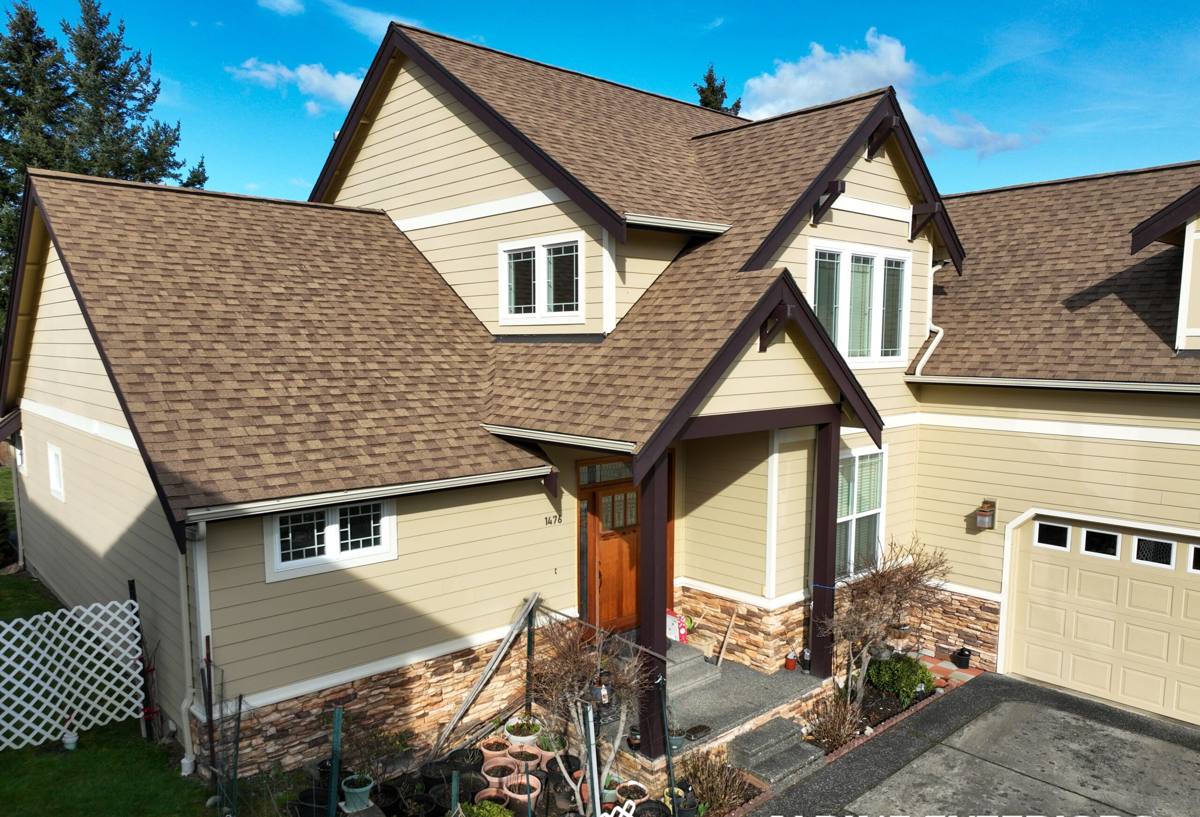
What Local Homes Actually Need From Their Windows
Moisture Management Above Everything Else
In most of the country, window failures show up as drafts or fogged glass. Around Samish and Chuckanut, the bigger risk is water finding its way behind the window frame and into the wall assembly, where it can sit against wood sheathing and framing for months at a time without anyone noticing. A window that's beautiful but poorly flashed will cause more damage here, faster, than almost anywhere else in the state.
Hardware That Resists Salt Corrosion
Locks, hinges, cranks, and screws on window hardware are usually the first thing to show wear in a coastal-influenced climate. Cheaper hardware finishes pit and corrode within a few seasons of exposure to salt air, even on homes set back from the water. This matters more for west- and south-facing exposures that catch the prevailing weather.
Frame Materials That Don't Feed the Moss Problem
Wood window sills and trim in shaded, damp spots are where moss and mildew take hold first, and once established it holds moisture against the wood and accelerates decay. That doesn't rule out wood-look products, but it does mean the material and finish need to be chosen with eyes open about the maintenance commitment.
Choosing the Right Window Material for This Area
There's no single "best" window material — each comes with real trade-offs for a Samish property. Here's how the common options actually perform in this specific climate:
| Material | Salt air / corrosion resistance | Moisture behavior | Maintenance in moss season |
|---|---|---|---|
| Vinyl | Good — won't corrode or rust | Doesn't absorb water; seals and gaskets are the weak point over time | Low — occasional rinse-off keeps sills clear |
| Fiberglass | Very good — dimensionally stable, resists pitting | Excellent; holds paint and seals well over decades | Low to moderate |
| Wood (clad or unclad) | Depends entirely on cladding and upkeep | Vulnerable if finish fails or flashing is imperfect | High — repainting/refinishing on a schedule, closer attention to sills |
| Aluminum | Fair — needs a quality anodized or powder-coat finish to avoid pitting | Prone to condensation without a thermal break | Moderate |
For most Samish homes, we steer clients toward vinyl or fiberglass for the bulk of a project, and reserve wood-clad or wood-look products for covered porches, entries, or upper stories that see less direct weather. That's not a knock on wood windows — it's an honest read on how much upkeep a homeowner is signing up for on an exposed wall a hundred yards from the water versus one that's sheltered.
What a Correctly Installed Window Involves
The window unit itself is maybe half the job. The other half — the part nobody sees once trim goes back on — is what determines whether that window lasts 10 years or 30 in this climate.
- Removing the old window down to the rough opening and inspecting the sheathing and framing underneath for hidden rot before anything new goes in
- Correcting any water damage found at that stage rather than covering it up
- Installing a sloped sill pan so any water that does get past the window drains outward, not into the wall
- Proper flashing sequence — water-resistive barrier integrated with flashing tape, lapped shingle-style so every layer sheds water to the one below it
- Sealing and insulating the gap around the frame without over-packing it, which can bow the frame and cause operational issues
- Exterior sealant at the right joints only — sealing the wrong joint can trap water instead of keeping it out
- Confirming the window operates smoothly and locks fully before we call the job done
Skipping or rushing any one of these steps is how a "new window" ends up with a soft spot in the wall five years later. This is also where hiring based on lowest bid alone tends to backfire — the visible parts of a bad install look identical to a good one on day one.
Our Process for a Samish Window Project
1. On-Site Assessment
We look at each opening individually — sun and rain exposure, current condition of the framing, and how much of the weathering pattern is specific to that wall of the house. A north-facing wall shaded by trees and a south-facing wall catching full weather off the bay often need different answers even on the same house.
2. Product Selection Based on That Assessment
We walk through material, glass, and hardware options against your budget and how much upkeep you actually want to take on, not just what looks best in a showroom.
3. Precise Measurement and Ordering
Custom windows are built to the exact opening — there's no room for guesswork here, and rushing this step is how homeowners end up with gaps that get sealed with too much caulk instead of a properly sized unit.
4. Removal, Inspection, and Installation
Old windows come out, framing gets inspected and repaired if needed, and the new unit goes in with full flashing and sealing as described above.
5. Final Check and Cleanup
We test operation and locks, clean up the work area, and walk the homeowner through anything they should know about their new windows.
What Affects the Cost
Every project is different, but the price of a custom window job in this area generally moves with a handful of factors:
| Factor | Why it matters here |
|---|---|
| Number and size of openings | Straightforward — more and larger openings mean more material and labor |
| Frame material chosen | Vinyl is generally the most budget-friendly; fiberglass and wood-clad cost more up front but shift the maintenance math |
| Condition of the existing framing | Hidden moisture damage discovered during removal adds repair time — common on older homes near the water |
| Exposure and access | Upper-story or hard-to-access windows on exposed walls take longer to flash and seal correctly |
| Glass package | Upgraded glazing for wind, noise, or energy performance adds cost but pays off on exposed walls |
We'd rather walk a property and give a real number than throw out a broad estimate that doesn't hold up once we see the actual openings.
Maintenance That Keeps Moss and Salt From Winning
Even the right windows, correctly installed, benefit from a little seasonal attention in this climate:
- Rinse sills and tracks a couple of times a year to clear salt residue and organic debris before it holds moisture
- Keep gutters and downspouts clear so overflow doesn't run down onto window heads
- Trim back vegetation that shades a window and keeps it damp longer after rain
- Check exterior caulking annually — UV and moisture cycling will eventually break down even good sealant
- Address any moss growth on sills or trim promptly rather than letting it establish
None of this is heavy lifting, but skipping it is how a good installation slowly turns into a problem over a decade instead of lasting the way it should.
Why It Matters to Hire a Crew That Already Works This Area
A contractor who mostly works drier, inland parts of Washington isn't necessarily going to over-flash a window or think twice about hardware finish — because in their usual conditions, it doesn't matter as much. Around Samish and Chuckanut, those details are the difference between a window that's still tight in fifteen years and one that's causing wall damage in five. A crew that regularly works this stretch of Whatcom County has already seen which details fail first on homes exposed to Samish Bay weather, and builds the job around avoiding those specific failure points rather than following a generic install checklist.
If you're weighing custom windows for a Samish home, we're happy to take a look, walk you through honest options for your specific exposure and budget, and give you a straightforward estimate — no pressure, no upsell. The form below gets you started.