 Chuckanut Exterior
 Windows Built for Burlington's Weather, Not Just the Showroom
Burlington sits close enough to the water and the foothills that its homes take a particular kind of beating: salt-laden air off the Sound, long stretches of driving rain that comes in sideways more often than straight down, and a moss season that stretches from fall clear into spring. None of that is dramatic on any given day. It's the accumulation that does the damage — years of moisture finding its way into a window opening that wasn't sealed quite right, or aluminum hardware slowly pitting from salt exposure nobody accounted for at install time. A window installation crew that only works dry inland climates tends to underbuild for this. We don't, because this is the only kind of weather we install in.
This page is specifically about window installation for homes in and around Burlington. Not a general window overview — the actual decisions that matter when you're replacing or installing windows in a Whatcom County coastal-adjacent climate.
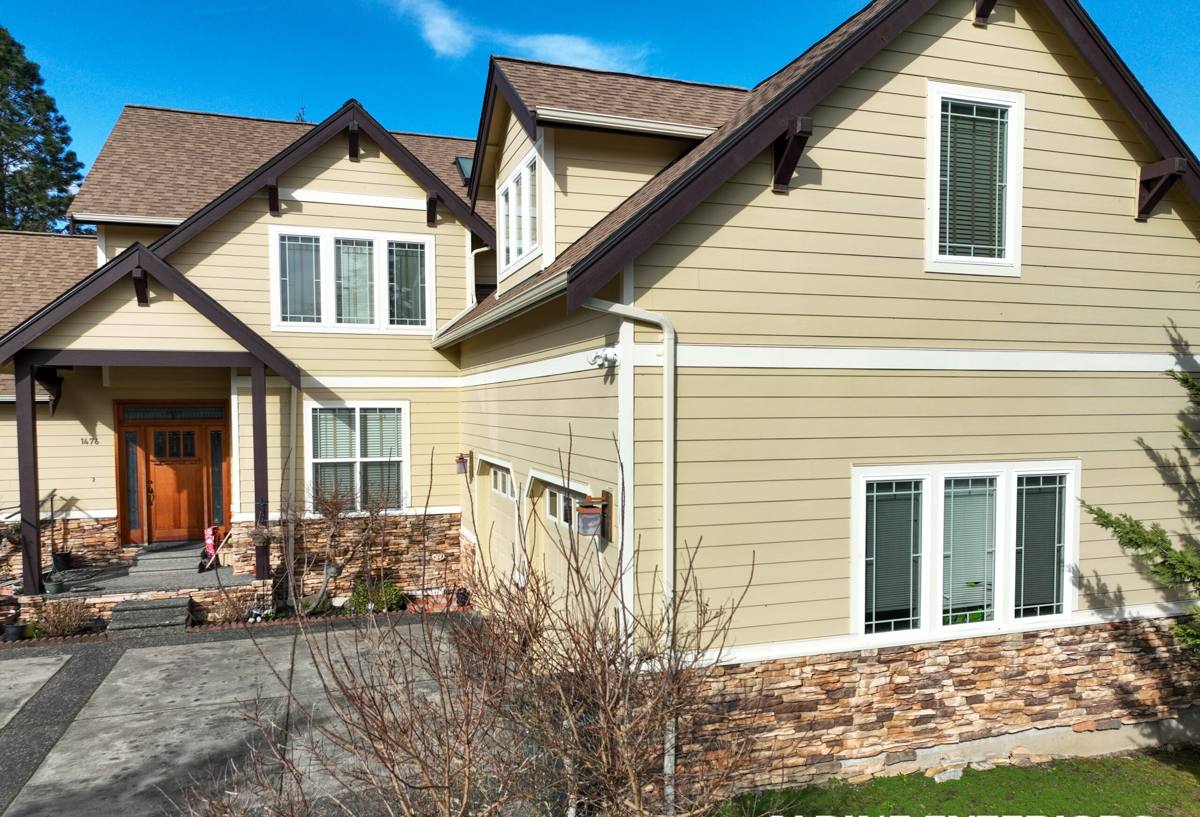
What Burlington's Climate Actually Does to a Window Opening
Three things drive almost every window failure we get called out to fix in this area:
- Wind-driven rain. Storms here often push rain horizontally, which means water hits the top and side flashing of a window opening far harder than it would in a calmer climate. A flashing detail that would be fine somewhere drier can leak here.
- Salt air corrosion. Being close to Puget Sound air means metal components — hinges, balances, cranks, screws — corrode faster than manufacturers' generic warranty language usually assumes. Cheap hardware shows this first.
- Moss and organic buildup. Extended damp seasons let moss and algae take hold on sills, trim, and anywhere water sits instead of draining. Beyond looking bad, moss holds moisture against wood and paint far longer than the season itself lasts, which accelerates rot at the sill.
None of these are exotic problems. They're just steady, and a window installation that doesn't respect them will show its weaknesses within a few wet seasons rather than a few decades.
What a Correct Window Installation Involves Here
The Opening Matters More Than the Window
Homeowners often shop for the window itself — brand, glass package, frame material — and that's reasonable, but in this climate the opening prep is what actually determines whether the window performs. We check the rough opening for square, for any existing rot or moisture damage in the sill or jack studs, and for proper slope so water that does reach the sill sheds outward instead of pooling.
Flashing Sequence, Done in the Right Order
This is the single biggest factor in whether a window leaks in five years. Flashing has to be layered so each piece sheds water onto the one below it — sill pan first, then side flashing, then head flashing, integrated with the house wrap in that order (bottom to top, always). Skip a step or flash out of sequence and you've built a funnel instead of a barrier. In a climate with regular wind-driven rain, that mistake shows up fast.
Sealing Without Trapping Moisture
There's a difference between sealing a window and sealing it correctly. Every gap gets sealed against air and bulk water intrusion, but the assembly still needs a way for any moisture that does get in to escape — usually through a properly installed sill pan with a drainage path, not sealant alone. Caulk everything shut with no drainage plan and you trap water inside the wall instead of keeping it out.
Insulation Around the Frame
Low-expansion foam or backer rod and sealant around the window frame, not stuffed fiberglass batting, which compresses and leaves gaps over time. This also matters for energy performance — a well-air-sealed window opening cuts drafts more than most people expect from the window swap alone.
Our Process for a Burlington Job
- On-site assessment. We look at the existing openings, check for rot or prior water damage, and take real measurements — not a phone estimate.
- Honest scope conversation. If we find sill damage or structural issues once we open things up, we tell you before proceeding, not after the invoice.
- Opening prep and flashing. Sill pan, side flashing, head flashing, integrated with your home's water-resistive barrier in the correct sequence.
- Window set and shim. Leveled, squared, and shimmed so the sash operates correctly for years, not just on install day.
- Air seal and insulate. Low-expansion foam or backer rod, sealant on the exterior, and interior finish work to match your existing trim.
- Final check. Operation test on every window, exterior seal inspection, and a walkthrough with you before we call it done.
Choosing Window Materials for This Climate
There isn't one correct answer for every home, but there are real trade-offs worth knowing before you decide.
| Frame Material | How It Handles Salt Air & Moisture | Maintenance | Typical Fit |
|---|---|---|---|
| Vinyl | Doesn't corrode; performs well against salt air; can expand/contract with temperature swings | Low — occasional cleaning | Most Burlington homes, good value |
| Fiberglass | Very stable dimensionally, strong resistance to moisture and corrosion | Low | Homes wanting longevity, willing to pay more upfront |
| Wood-clad | Good performance if cladding and flashing are correct; interior wood still needs protection from condensation | Moderate — exterior clad protects wood, but seals need monitoring | Homes prioritizing interior wood appearance |
| Bare aluminum | Prone to corrosion and pitting in salt-air exposure over time | Higher — hardware and finish need more attention | We generally steer clients away from this in our coastal-adjacent service area |
We're not going to tell you a product is junk — every material has a place. But we will tell you plainly when a material isn't a good match for this specific climate, because that's a maintenance headache we'd rather you avoid than sell you.
Signs Your Current Windows Are Losing the Fight
- Fogging or condensation between double-pane glass (seal failure, not fixable by cleaning)
- Soft or discolored trim or sill wood, especially on north- or west-facing windows
- Visible moss or dark streaking on sills or below the window that keeps returning after cleaning
- Drafts you can feel with a hand near the frame on a windy day
- Windows that stick, won't stay open, or are hard to lock — hardware fatigue from corrosion or a settling frame
- Paint or finish bubbling near the window opening, which usually means moisture is already behind it
Any one of these on its own isn't an emergency. Several together, or one that's gotten worse over a season, is worth having looked at before it becomes a rot repair instead of a window swap.
Why a Local Burlington Crew Matters
Window installation isn't just a product spec — it's a set of judgment calls made on-site: how much slope to build into a sill pan, how far to extend flashing given this specific roofline, whether an opening's existing rot is cosmetic or structural. Those calls get better with repetition in the same conditions. A crew that works Whatcom County regularly has already seen how wind-driven rain behaves against a given elevation, how moss builds up on sills that don't slope enough, and where salt air tends to attack hardware first. That's not something you can look up — it's pattern recognition from doing the work here, repeatedly, through actual wet seasons.
It also means we're around after the install. If a seal needs a look two years down the road, or a warranty question comes up, you're calling a crew that's still working in your area, not chasing down a company that did one job and moved on.
What Affects Your Cost
We don't publish fixed pricing because every job's opening condition, window count, and material choice differ — but the honest cost drivers are these:
- Number and size of windows being replaced or installed
- Frame material chosen (vinyl, fiberglass, wood-clad)
- Condition of the existing opening — rot repair adds labor and material beyond a straightforward swap
- Whether it's a retrofit (reusing the existing frame opening) or a full-frame replacement (removing down to the rough opening, generally better for long-term performance in this climate)
- Trim and interior finish work needed to match your home
We'll walk your specific windows with you and give you real numbers, not a range pulled from a general price sheet.
Get a Straight Estimate
If your windows are showing wear, or you're planning ahead of the next wet season, we're happy to come take a look and give you an honest read on what's needed — no pressure, no upsell script. Use the form below to request a free estimate for your Burlington home.