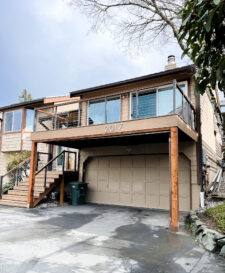
 Chuckanut Exterior
 Why Blanchard's Coastal Climate Changes the Window Equation
Homes around Blanchard sit close enough to open water that salt air is a daily fact of life, not an occasional nuisance. Add the steady, driving rain that rolls through this part of Washington for much of the year, plus a moss season that can stretch from fall through spring, and you have a combination that's genuinely harder on windows than what most manufacturers design and warranty for. A window that performs fine in a dry inland climate can start showing problems here in a fraction of the time — corroded hardware, swollen sashes, water staining on interior sills, or a slow buildup of moss and algae in the frame corners where water sits.
Custom windows done right for a Blanchard home aren't just about picking a style you like. They're about matching frame material, glazing, and installation detail to what this specific stretch of coastline throws at a building envelope year after year. That's the lens we bring to every project in and around Chuckanut — we're not guessing at what holds up here, we're working from what we see fail and what we see last.
What Salt Air, Driving Rain, and Moss Do to Windows Over Time
Salt Air and Corrosion
Airborne salt is a slow, quiet problem. It settles on metal hardware, screen frames, and any exposed fasteners, and it accelerates corrosion far beyond what you'd see even a few miles inland. Cheaper aluminum hardware, uncoated screws, and low-grade weatherstripping clips are usually the first things to go — often within a handful of years. Once hardware seizes or corrodes, a window that used to open and lock smoothly starts binding, which puts stress on the sash and frame themselves.
Driving Rain and Water Intrusion
Rain that comes in mostly sideways, which is common here, tests a window's flashing and sealant details far harder than a straight-down rain would. Most window failures we investigate aren't actually failures of the window unit itself — they're failures of the flashing, sill pan, or sealant joint around it. Water finds the smallest gap, and once it's behind the trim or siding, it can sit there for months before anyone notices a stain or a soft spot in the wall.
Moss, Algae, and Prolonged Dampness
A long moss season means surfaces that stay damp for extended stretches grow organic buildup — not just on roofs, but in window sill corners, between glazing beads, and in any frame profile with a horizontal ledge that traps moisture. Beyond looking bad, that dampness accelerates wood rot in wood-frame windows and can degrade seals and gaskets faster than dry-climate wear ever would.
What "Correct" Custom Window Installation Actually Involves
A lot of window problems trace back to installation shortcuts, not the window product itself. For a Blanchard home, we treat these as non-negotiable:
Proper Sill Pan and Flashing Integration
Every opening gets a sloped sill pan that directs any water that gets past the window back outward, not into the wall cavity. Flashing tape and house wrap need to be integrated in the correct shingle-lap order — top layer over bottom layer — so water is always directed down and out, never trapped behind a layer above it.
Correct Fastening and Shimming
Windows need to be shimmed square and plumb at every fastening point, not just at the corners. A window that's slightly racked in the opening will bind at the hardware and stress the seals unevenly, which shows up early in a climate this wet — usually as a corner that won't fully latch or a draft you can feel on a windy day.
Sealant Selection and Placement
Not every exterior sealant is rated for the UV and moisture cycling this climate delivers. We use products rated for long-term exterior exposure at the joints that matter, and we're deliberate about where sealant belongs and where it doesn't — sealing the wrong gap can trap water instead of releasing it.
Frame Material Comparison for Blanchard Homes
| Frame Material | Salt Air Resistance | Maintenance | Typical Fit for This Climate |
|---|---|---|---|
| Vinyl | Good — won't corrode, but coastal UV can affect finish over decades | Low | Solid, budget-friendly choice for most Blanchard homes |
| Fiberglass | Very good — dimensionally stable, resists corrosion and moisture movement | Low | Strong option where durability matters more than upfront cost |
| Wood (unclad) | Poor without diligent upkeep — prone to rot and moss in damp, shaded exposures | High | Only recommended with a clear maintenance commitment |
| Wood-clad (aluminum or fiberglass exterior) | Good on the exterior face, interior wood still needs some care | Moderate | Good middle ground for a traditional look with better weather protection |
| Aluminum | Fair — prone to corrosion at fasteners and hardware unless properly coated | Moderate | Less common here; needs marine-grade hardware to hold up |
We don't push one material for every home. The right choice depends on your home's exposure — how directly it faces the water and prevailing weather, how much shade and dampness the walls sit in, and how much upkeep you actually want to do. We'll walk through the honest trade-offs for your specific house rather than defaulting to whatever's easiest to sell.
Our Process, Start to Finish
- On-site assessment. We look at existing window condition, current flashing and sealant state, and any signs of past water intrusion or moss buildup before recommending anything.
- Material and glazing selection. Based on your home's exposure and budget, we go over frame material, glass package, and hardware options — plain terms, real trade-offs, no upselling.
- Measurement and ordering. Custom windows are measured precisely to the existing openings, accounting for any out-of-square conditions common in older homes.
- Removal and opening prep. Old units come out carefully, and we inspect the rough opening for hidden rot or water damage before anything new goes in — this is often where past problems surface.
- Sill pan, flashing, and installation. New windows go in plumb and square with correct flashing sequencing and sill pan drainage, not just caulked into place.
- Interior and exterior finish work. Trim, sealant, and touch-up work are completed to match your home's existing finish.
- Final walkthrough. We test operation, check for square, and confirm everything is sealed and finished before we call the job done.
Cost Factors to Expect
| Factor | Why It Moves the Price |
|---|---|
| Frame material | Vinyl is generally the most affordable; fiberglass and wood-clad cost more upfront but often cost less in long-term maintenance |
| Glass package | Low-E coatings and gas-filled units cost more but perform noticeably better against condensation and heat loss in this climate |
| Opening condition | Rot or water damage found during removal adds repair scope beyond the window itself |
| Number and size of openings | Larger or custom-shaped windows require more material and labor per unit |
| Access and site conditions | Second-story or hard-to-access openings take longer and can require additional equipment |
We don't quote a per-window number without seeing the openings first — anyone who does is guessing. What we can promise is a written estimate that spells out exactly what's included, so there are no surprises once the job starts.
A Pre-Install Checklist We Walk Every Blanchard Home Through
- Current window condition — hardware function, glass fogging, visible rot or corrosion
- Existing flashing and sealant condition around each opening
- Signs of past water staining on interior sills, walls, or trim
- Moss or algae buildup in frame corners or sill tracks
- Exposure direction and how much direct weather each side of the home takes
- Rough opening squareness and any framing concerns behind the trim
- Desired glass performance — Low-E coating, gas fill, and sound dampening needs
- Interior finish requirements to match existing trim and paint or stain
Why Local Experience in Blanchard Matters
A crew that's worked homes in and around Blanchard already knows what this specific stretch of coastline does to a building — where salt exposure tends to concentrate, which sides of a house typically take the worst driving rain, and where moss builds up fastest given the tree cover and shade patterns common here. That's not something you can fully substitute with a generic install checklist. It shows up in small decisions: which sealant to use where, how aggressive the sill pan slope needs to be, and which hardware finishes are actually worth the upcharge versus which ones will corrode regardless.
It also means we're not learning on your house. We've seen what a rushed or generic install looks like five years later in this climate, and we build every job to avoid becoming that callback.
Maintaining Your New Windows in This Climate
Even a correctly installed, well-chosen window benefits from a bit of seasonal attention here. Rinsing salt residue off frames and hardware a few times a year — especially after storms — extends hardware life noticeably. Keeping sill tracks and weep holes clear of debris and moss prevents standing water from sitting against the frame. And a quick annual look at exterior sealant joints catches small cracks before they become water intrusion points. None of this is heavy maintenance, but skipping it in a climate this wet shortens the life of even a good window.
If your Blanchard home has windows showing their age — sticking hardware, fogged glass, drafts, or visible moss and staining — we're happy to take a look and give you a straightforward, no-pressure estimate. Use the form below to get started.